
Fast, Reliable Chimney Liner & Rebuild Across Greenburgh
Chimney liner installation and rebuild in Greenburgh typically runs $2,800–$7,500 depending on flue count and access, with most projects completed in one to two days. Our Chimney Liner & Rebuild crew is on the road six days a week, and we regularly reach Greenburgh homes from our Yonkers base within 30–45 minutes. If you’re smelling smoke you can’t trace, seeing water stains near your chimney breast, or running a new gas appliance through an old coal-era flue, call us at (844) 660-6590 for a free inspection and honest assessment.
We’ve worked on chimneys all over Greenburgh — from the riverfront Tudors of Irvington to the post-war colonials in Hartsdale and the hillside homes along Dobbs Ferry’s Broadway corridor. The town’s housing stock tells a consistent story: beautiful, well-built masonry chimneys that have outlasted their original heating fuels but haven’t always been properly adapted for what’s burning in them now.
Why Sterling Chimney Cleaning Yonkers Is Greenburgh’s Preferred Chimney Liner & Rebuild Company
Local reputation built on showing up personally. Gary Murphy, our owner and lead technician, has been climbing Greenburgh roofs for 11 years. He doesn’t send crews — he leads every job himself. When you call Sterling, the person diagnosing your flue is the same person who’ll be on your roof with the tools, making the call about repair versus rebuild.
Over 1,100 homeowners have trusted us — 1,142 verified reviews averaging 4.7 stars. That depth of feedback matters in a trade where most competitors have a few dozen reviews at best. Greenburgh customers specifically mention our willingness to explain what we found, show photos from the inspection, and talk through options without pressure.
Response time that respects your schedule. We’re typically in Greenburgh within the hour for urgent calls — water actively entering through a crown crack, a blocked flue backing up carbon monoxide, or a partial collapse after a hard freeze. For standard liner inspections and estimates, we book within 48 hours and arrive when we say we will.
We know what we’re looking at. Greenburgh’s chimneys aren’t generic. A three-flue stack in a 1920s Dobbs Ferry colonial is a completely different animal from a single-flue ranch chimney in Edgemont. We understand the local conversion history — coal to oil to gas — and we know where the shortcuts were taken.
Our Chimney Liner & Rebuild Services in Greenburgh
Stainless Steel Liner Installation
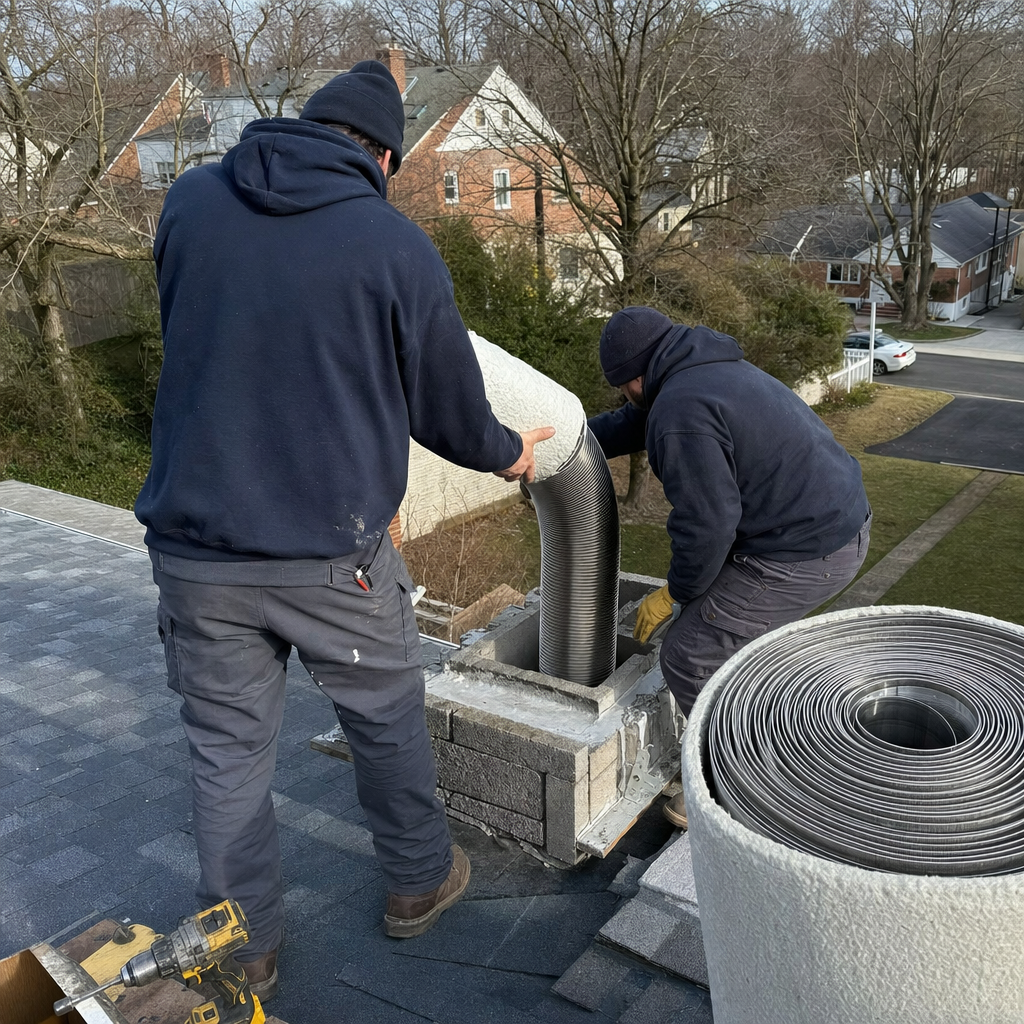
For most Greenburgh gas boiler and fireplace conversions, we install rigid or flexible stainless steel liners sized precisely to the appliance. We recently relined a three-flue chimney in a 1920s Tudor on North Broadway, Irvington, where the abandoned coal flue was packed with decades of creosote and nesting debris — sparking a mystery smoke smell the homeowner couldn’t trace. We installed a 6-inch DuraFlex stainless steel liner for the active gas boiler and HeatShield sealed the fireplace flue, eliminating all odor and restoring safe venting. Stainless steel handles the acidic condensation from modern high-efficiency gas appliances far better than the original clay tile ever could.
Flexible Liner Solutions
Tight chimney chases, offset flues, and structural obstacles are common in Greenburgh’s older homes. Flexible liners navigate these constraints without tearing out walls or breaking through masonry. In Hartsdale’s 1950s split-levels, we’ve run flexible liners down chases that would require major demolition with rigid pipe. The material is the same high-grade stainless — just engineered for complex paths.
Liner Replacement
Not every damaged liner needs a full rebuild. When clay tiles are cracked but the surrounding masonry is sound, we extract the old liner and install a new stainless system that ventilates properly for your current fuel. This is the most common scenario we see in Greenburgh: a 1960s oil-to-gas conversion where someone jammed a too-small flex pipe into a coal-era flue, or worse, left it completely unlined. Replacement corrects the sizing mismatch and brings the system up to modern NFPA 211 standards.
Partial Chimney Rebuild
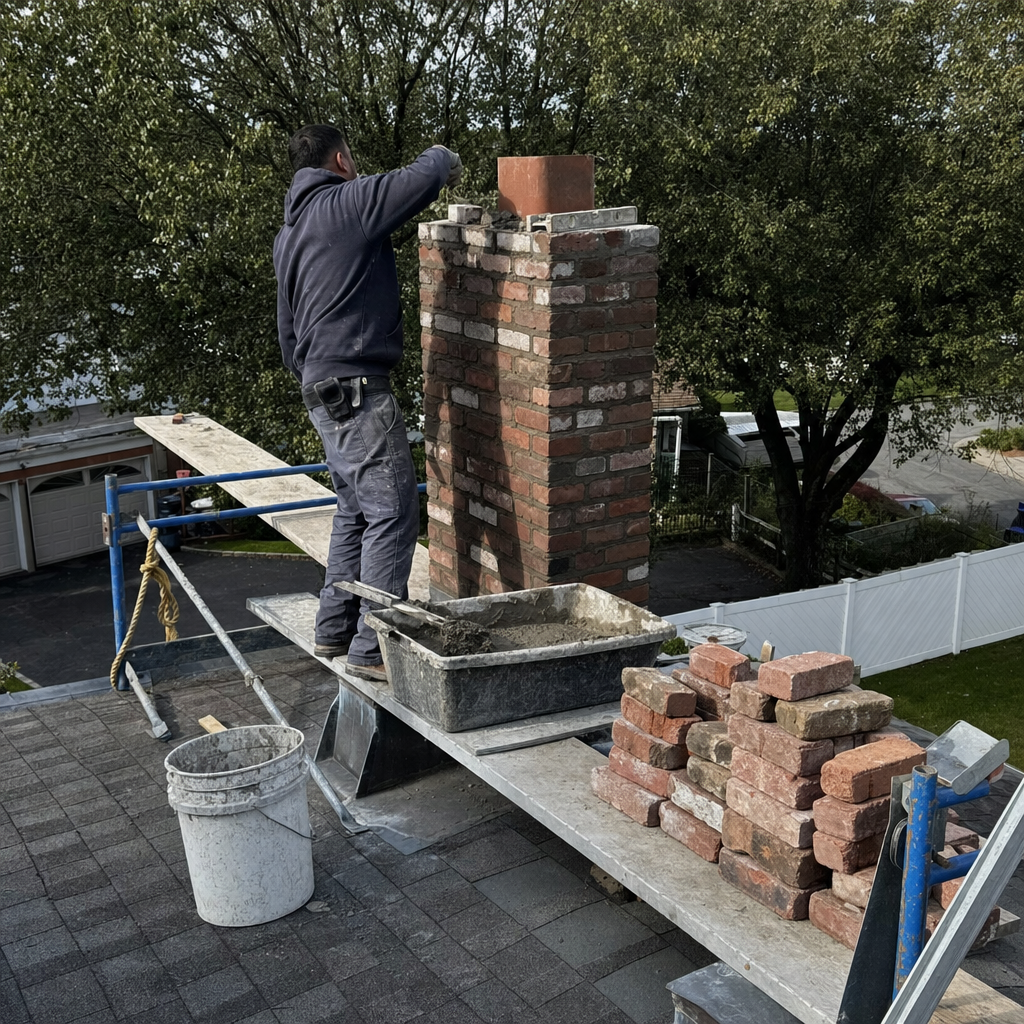
Greenburgh’s Hudson River valley location exacts a toll. River moisture and Westchester County’s 30-plus annual freeze-thaw cycles spall brick faces and blow out mortar joints faster than in towns farther inland. Northeast wind events funnel up the valley and drive rain directly into deteriorated crowns. When the upper courses of brick are failing but the lower structure is sound, we perform partial rebuilds — typically from the roofline up — matching existing mortar color and brick profile where possible. We’ve done this work on homes along the Saw Mill River Parkway corridor and in the hills above Hastings-on-Hudson where exposure is worst.
What happens when you call
- 1
A real person answersNo phone trees — you reach a local pro.
- 2
You get an upfront price rangeHonest numbers before anyone is dispatched.
- 3
A background-checked tech heads outLicensed & insured, dispatched right away.
- 4
You approve before work beginsNothing starts until you say go.
Trusted Brands We Service in Greenburgh
We specify materials based on what the job demands, not what’s cheapest to stock. For Greenburgh liner work, we regularly install DuraFlex stainless systems for their corrosion resistance in high-condensation gas applications, and HeatShield cerfractory resurfacing when a clay flue can be restored rather than replaced. Gelco and Olympia Chimney components round out our inventory for caps, collars, and specialty fittings. We keep common sizes in stock so Greenburgh customers aren’t waiting weeks for a standard liner order — a real advantage when you’re mid-winter and your boiler flue just failed inspection.
Common Chimney Liner & Rebuild Problems We See in Greenburgh Homes
- Oversized gas flues rotting from within. In Greenburgh’s older river-valley communities like Irvington and Dobbs Ferry, pre-1950 masonry chimneys originally built for coal or oil were often never relined when homes converted to gas in the 1970s–80s, creating oversized or mismatched flues that accelerate condensation and deterioration at a rate unseen in newer suburbs. The low-temperature exhaust condenses on flue walls, and that acidic moisture eats mortar and clay tiles from the inside out — often hidden until a water spot appears on the living room ceiling.
- Abandoned flues become debris traps. In Greenburgh’s older Tudor and colonial neighborhoods, it is routine to find a three-flue chimney where one flue is actively serving a gas boiler, one serves a working fireplace, and the third — originally the oil-burner or coal-furnace flue — was simply abandoned uncapped inside the chase decades ago. That abandoned flue is almost always the one harboring nesting material, creosote residue from a prior occupant’s wood use, and the source of the mysterious smoke smell the homeowner can’t explain.
- Freeze-thaw damage to exposed masonry. Greenburgh sits in the Hudson River valley corridor, where river moisture and Westchester County’s 30-plus annual freeze-thaw cycles work together to spall brick faces and blow out mortar joints in exposed chimney stacks faster than in towns farther inland. Northeast wind events funnel up the valley and drive rain directly into deteriorated chimney crowns, meaning water intrusion complaints spike noticeably after nor’easters even on chimneys that appear sound from the ground.
- Multi-appliance configurations hiding problems. Greenburgh contains a layered mix of late-Victorian and early 20th-century homes in its Hudson-facing villages and 1940s–60s colonials and split-levels in inland neighborhoods like Hartsdale and Edgemont; the vast majority have original multi-flue masonry chimneys with clay tile liners now 60–100 years old. Multi-appliance chimney configurations — boiler flue, fireplace flue, and sometimes a former wood-stove thimble all in one chase — are common and mean a single cleaning visit frequently reveals abandoned open flues packed with debris.
Pricing for Chimney Liner & Rebuild in Greenburgh, NY
Here’s what Greenburgh homeowners can expect for typical liner and rebuild work:
- Single-flue stainless steel liner installation: $2,800–$4,200
- Multi-flue stainless steel liner system: $4,500–$6,800
- Flexible liner in obstructed or offset chase: $3,200–$5,000
- Liner replacement (extract old, install new): $2,500–$4,500
- Partial rebuild (roofline up, brick match): $3,500–$7,500
- Full chimney rebuild: $8,500–$15,000+
- Chimney crown repair or pour: $850–$1,800
What moves you within these ranges: flue count and diameter, roof pitch and access difficulty, whether we need to break into walls or can work entirely from the top, and the condition of existing masonry. A straightforward single-flue liner down a straight chase in Hartsdale runs toward the lower end. A three-flue system in a steep-roofed Irvington Tudor with offsets and a damaged crown pushes higher. We provide itemized written estimates before any work begins — call (844) 660-6590 to schedule your free inspection.
We Also Serve Cities Near Greenburgh
Our service radius covers the full river-town corridor. We regularly perform chimney liner installation and rebuild work in Irvington, Dobbs Ferry, Hartsdale, and Hastings-on-Hudson — all sharing Greenburgh’s legacy housing stock and Hudson Valley exposure challenges. If you’re unsure whether your address falls within our coverage, call and we’ll confirm.
Serving Greenburgh, NY — Our Local Coverage Area
We’re based in the Greenburgh area and know this community well. Use the map below to see our service coverage — if you’re nearby, we can almost certainly help.
FAQs — Chimney Liner & Rebuild in Greenburgh
Schedule an inspection immediately — that abandoned flue is almost certainly packed with creosote, nesting debris, or both, and it’s creating a fire hazard and odor pathway into your living space. We see this exact scenario routinely in Greenburgh’s older neighborhoods; our field inspection will include a video scan of all three flues and a plan to properly cap or reline the abandoned flue. Call (844) 660-6590 — estimates are free, and we can usually inspect within 48 hours.
Yes — converting to gas without properly sizing and lining the flue is a code violation and a safety risk. Gas exhaust is cooler and more acidic than oil exhaust; in an oversized clay flue designed for oil or coal, it condenses rapidly and destroys the masonry from within. We install gas-rated stainless liners sized to your new boiler’s output, typically completing the job in one day. Call (844) 660-6590 for a free estimate before your boiler installer finishes their work.
Look for fresh concrete-colored debris on the roof or ground near the chimney, new water stains on the ceiling adjacent to the chimney breast, or visible cracks and missing chunks on the crown itself from ground level with binoculars. Greenburgh’s valley position means nor’easters drive rain directly into crown defects that inland storms might miss. If you suspect damage, we’ll inspect at no charge — water intrusion accelerates liner and masonry failure fast. Call (844) 660-6590.
Don’t cap it until you know what’s inside — an uncapped flue that’s been open for decades typically contains debris, moisture damage, and possibly live animal nesting that needs professional removal first. Capping over a blocked flue traps moisture and creates pressure problems for adjacent active flues. We inspect with a camera, clear and document the condition, then install a proper cap with ventilation. Call (844) 660-6590 to schedule; estimates are free.
Coal-era flues are almost always too large for modern gas boilers, so repair alone won’t solve the underlying problem — the flue will continue to condense and deteriorate. We typically recommend full liner replacement with a correctly sized stainless steel system, which restores proper draft, eliminates condensation damage, and meets current safety standards. In some cases where the clay tile is intact but oversized, we can install a properly sized liner inside the existing flue. Call (844) 660-6590 for a video inspection and specific recommendation.
Written by Gary Murphy, Owner at Sterling Chimney Cleaning Yonkers, serving Greenburgh and Westchester County since 2013.