
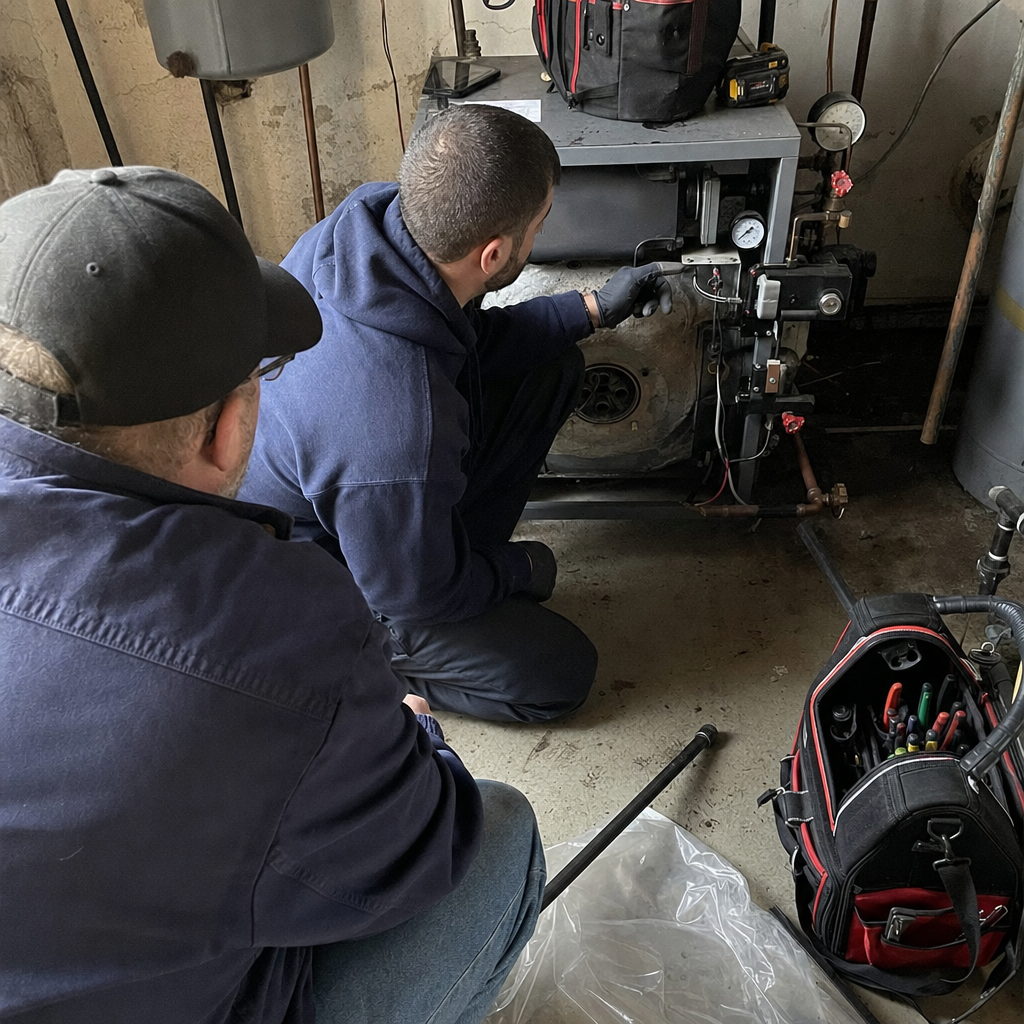
What Is Creosote Buildup? A Yonkers Chimney Owner’s Guide to What’s Really in Your Flue
Creosote buildup is the tar-like residue that forms inside your chimney flue when wood smoke cools and condenses on the walls before it can escape. It starts as a flaky, brushable dust, hardens into a sticky black coating, and eventually becomes a glazed, glassy substance that’s extremely difficult to remove — and in Yonkers’s century-old housing stock, it’s often hiding something worse underneath. If you’re burning wood in a pre-war chimney and haven’t had it inspected recently, call Sterling Chimney Cleaning Yonkers at (844) 660-6590 for an honest Chimney Cleaning & Sweep assessment of what you’re actually dealing with.
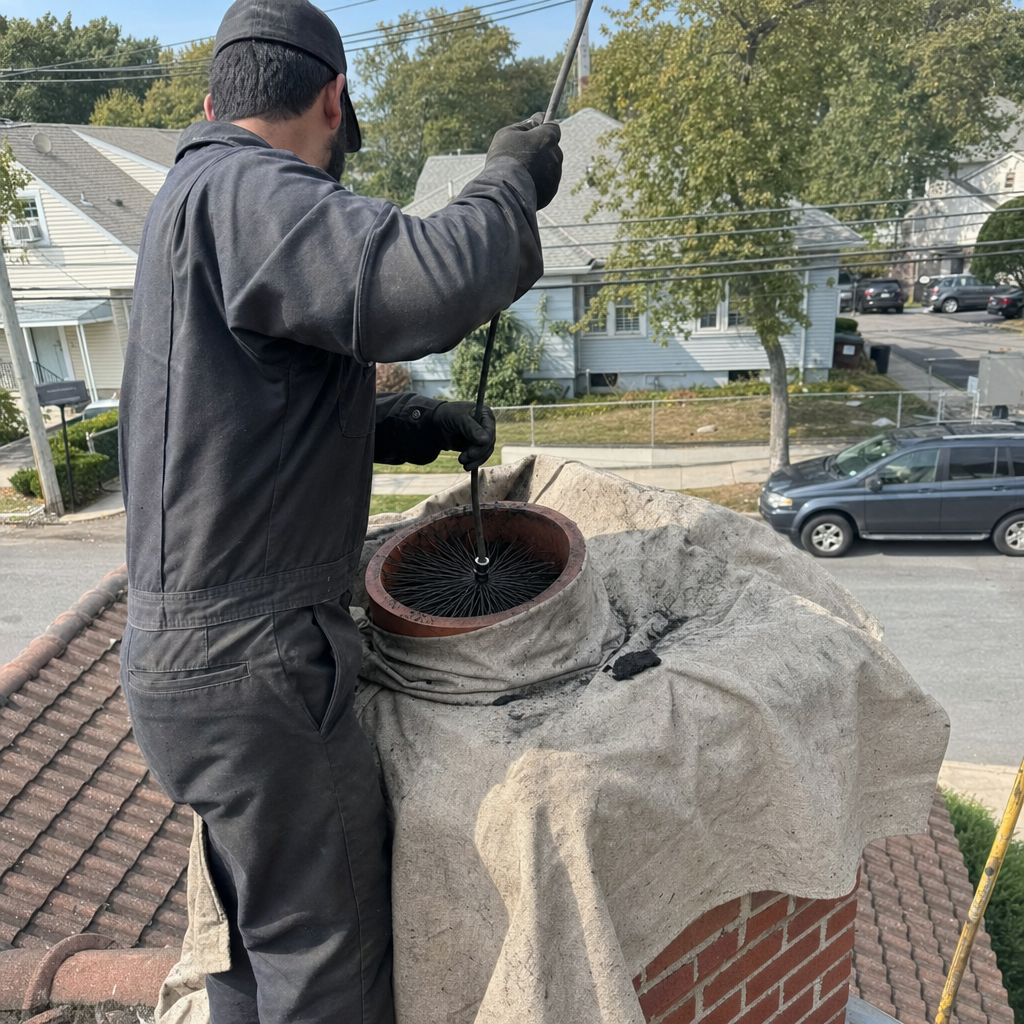
Growing up in the Nodine Hill neighborhood, I watched my father — a finish carpenter — explain every job to homeowners face-to-face. That’s where I learned that a tradesman should be able to look someone in the eye and tell them exactly what he found. For 11 years, I’ve run Sterling Chimney Cleaning that same way: I do the inspections myself, I climb the ladders myself, and I’ll tell you what I see, not what sells.
The Three Stages Everyone Talks About — and the Fourth One We Find in Yonkers
Most guides describe creosote in three stages. That’s accurate as far as it goes, but it doesn’t go far enough for the chimneys we work on in Yonkers.
Stage 1: Soot and flaky creosote. This is the early accumulation — a light, dusty layer that brushes off easily with a standard chimney sweep. If you’re burning seasoned hardwood and your flue is properly sized, this is what annual maintenance should find.
Stage 2: Tar-like, sticky creosote. The flakes have melted together into a thick, gummy coating. This requires more aggressive mechanical removal — rotary whips, harder bristles, sometimes chemical pretreatment to soften the deposit before it can be scraped free.
Stage 3: Glazed, hardened creosote. This is the dangerous stuff. The tar has baked onto the flue wall into a dense, glassy layer that can crack and block airflow, or ignite at temperatures above 450°F. Removing stage 3 creosote demands specialized equipment: rotary tools running at controlled speeds, chemical treatments like Cre-Away that break down the glaze over multiple applications, and significantly more time than a standard sweep.
The Yonkers fourth condition: layered legacy deposits. Here’s what the standard three-stage model misses. In Yonkers’s pre-war attached rowhouses and three-deckers — particularly around Park Hill, Nodine Hill, and the blocks near Getty Square — we’ve cleaned flues that present a fourth layer beneath whatever wood-fire creosote sits on top. Decades-old coal soot, oil-era carbon residue, and sometimes early attempts at DIY patching have fused to bare brick below. This isn’t creosote in the textbook sense, but it’s combustible, it restricts airflow, and it requires entirely different removal techniques than fresh wood-fire deposits.
A flue that looks like it has stage 2 creosote from the firebox might reveal, six feet up, a century of coal and oil residue that no brush-and-vacuum job will touch. We’ve had jobs where the initial inspection suggested a routine sweep, but the rotary camera showed glazed creosote over oil carbon over raw coal soot — three distinct material problems requiring three distinct approaches.
Why Yonkers Chimneys Build Creosote Faster Than the Suburbs Up North
Same wood, same fireplace, different result. Here’s what accelerates creosote accumulation specifically in Yonkers conditions.
Oversized flues act as creosote factories
A substantial portion of Yonkers housing went up between 1890 and 1945 with flues sized for coal furnaces or gravity-fed oil burners. The cross-sectional area of a coal-era flue is massive compared to what a modern wood stove or insert produces. Combustion gases expand into that huge volume, slow down, and cool below the condensation point before they ever reach the chimney top. Cooler gases mean more liquid creosote depositing on the walls. It’s simple physics, and it’s why a “properly” burning fire in an improperly sized flue still builds deposits faster than a smoky fire in a correctly matched system.
We’ve measured flues in Park Hill rowhouses that are 12×16 inches internally — designed to handle the output of a basement coal furnace — now venting a modest living-room fireplace burning two cords a year. That mismatch is a creosote production line.
Erratic draft from ridge-top exposure
Yonkers’s pronounced ridge-and-valley topography creates conditions you don’t see in the flatter, more sheltered suburbs to the north. Chimneys on the high ground of Park Hill and Nodine Hill face prevailing westerlies coming off the Hudson River. Gusts hit the chimney top, pressure fluctuates, and the steady upward draw that would carry hot gases out gets interrupted. Gases linger, cool, and condense. We’ve found chimneys on exposed ridgelines with stage 2 creosote after a single season of moderate use, while similar usage patterns in sheltered valleys produce only light stage 1 accumulation.
River moisture and freeze-thaw damage
The western edge of Yonkers runs directly along the Hudson, and even inland blocks feel the effects. Persistent river-sourced moisture penetrates aging brickwork, and winter freeze-thaw cycling spalls faces and blows out mortar joints. A compromised flue liner — or no liner at all — lets that moisture interact with creosote deposits, creating acidic compounds that accelerate deterioration of the underlying brick. The creosote isn’t just a fire hazard at that point; it’s actively eating the chimney from the inside.
Shared stacks and abandoned flues
In Yonkers’s attached rowhouse blocks, we routinely encounter a situation virtually unknown in central Westchester’s detached homes: multiple flues sharing a single chimney stack across party walls. A neighbor’s long-abandoned flue, left open at top and bottom, funnels cold air, moisture, and sometimes animals into the active flue next door. That cold intrusion drops the temperature of the working flue, accelerating creosote condensation. Coordinating repairs between separate landlords or owners across a party wall adds complexity no suburban sweep faces — but we’ve done it enough to know the drill.
What Creosote Removal Actually Involves — and Why Quotes Vary
Homeowners understandably want a straightforward Chimney Cleaning Cost in Yonkers, NY for “a chimney cleaning.” But the work required depends entirely on what we find, and what we find in Yonkers varies more than most markets.
| Deposit Type | Equipment Required | Typical Time | Price Range in Yonkers |
|---|---|---|---|
| Stage 1: Flaky soot | Standard brushes, HEPA vacuum | 45–75 minutes | $189–$249 |
| Stage 2: Tar-like creosote | Rotary whip system, chemical pretreatment | 1.5–2.5 hours | $279–$389 |
| Stage 3: Glazed creosote | Rotary tools + Cre-Away or similar, multiple passes | 2.5–4 hours | $389–$549 |
| Legacy coal/oil residue beneath creosote | Rotary tools, chemical treatment, possible liner evaluation | 3–5+ hours | $449–$749+ |
These ranges reflect what we’ve actually quoted and completed in Yonkers over 11 years of chimney-only work. The high end for legacy deposits includes the time needed to run a camera inspection, assess whether the underlying flue meets current Westchester County code, and discuss liner options if the bare brick is compromised. We use Gelco and Olympia Chimney liner systems when relining is the right call — materials chosen because they handle the temperature cycles and moisture exposure these old flues see, not because they’re the cheapest option to quote.
We’ve also used Famco components for custom cap and damper configurations on non-standard flue openings common in pre-war construction. The point is: the deposit determines the approach, and the approach determines the cost. Anyone quoting a flat rate before looking inside is guessing, and guessing isn’t how you handle a safety-critical system.
How to Tell What Stage You’re Dealing With
You can’t see most of your flue from the firebox. But there are observable signs that suggest what a professional inspection will find.
- Stage 1 indicators: Light black dust visible on the damper or smoke shelf; no strong odor when the fireplace isn’t in use; smoke draws well when the fire is burning; last cleaning was within 12–18 months with regular hardwood use.
- Stage 2 indicators: Shiny black, sticky residue on the damper; acrid, tar-like odor, especially in humid weather; some smoke spillage at fire startup; it’s been 2–4 years since last cleaning, or you’re burning softer woods or partially seasoned fuel.
- Stage 3 indicators: Hard, glossy black coating that’s difficult to scratch with a fingernail; strong, persistent creosote odor; visible smoke backup during normal burning; it’s been 5+ years, or you’ve never had the chimney inspected since buying the property.
- Legacy deposit indicators (Yonkers-specific): Pre-1945 construction with original flue; history of coal or oil heating (check basement for old burner remnants or capped fuel lines); multiple appliance connections visible in the flue; crumbling black material that’s more gritty than tar-like; any mention in old building records of “conversion” without relining.
If you’re seeing stage 2 or 3 signs, or if your home fits the legacy deposit profile, don’t burn again before getting it looked at. Glazed creosote can ignite at temperatures a normal fire reaches easily, and the chimney fire that results isn’t dramatic like in the movies — it’s often a slow, cracking burn inside the flue that damages the structure before you realize what’s happening.
What a Professional Creosote Assessment Includes
When Gary Murphy arrives at a Yonkers property for a creosote evaluation, here’s what happens — and what you should expect from any sweep you hire.
We start with a visual of the accessible firebox, damper, and smoke shelf, then run a chimney camera up the full flue length. This isn’t optional for old construction; you can’t assess deposit type or flue condition from the bottom three feet. We’re documenting what we find with video, identifying the deposit layers, checking for liner integrity, and looking for the Yonkers-specific problems: open adjacent flues, deteriorated mortar, moisture intrusion from spalled brick, and signs of previous partial cleanings that left dangerous material behind.
After 11 years and over 1,100 jobs in this market, we know what the camera will likely show before it goes up — not because we’re guessing, but because we’ve seen the patterns in this specific housing stock. A Park Hill three-decker built in 1920 with a converted coal flue? Probably legacy deposits. A 1950s ranch on the eastern slope with a clay-tile liner? Likely straightforward stage 1 or 2. The assessment isn’t about finding problems to sell; it’s about knowing what you’re starting with so the Best Chimney Cleaning & Sweep in Yonkers, NY method matches the actual condition.
If relining is needed to bring the flue to Westchester County code compliance — common when bare brick is exposed or the flue is oversized for the current appliance — we’ll explain the DuraFlex or HeatShield options that fit your specific configuration, with the understanding that not every old flue needs the same solution. Some get a full stainless liner. Some get a cast-in-place resurfacing. Some, honestly, are fine for another season with proper cleaning and monitoring. The recommendation follows the inspection, never the other way around.
FAQs
Affordable Chimney Cleaning & Sweep in Yonkers, NY for stage 1 creosote typically runs $189–$249, while glazed stage 3 creosote or legacy coal/oil deposits requiring rotary tools and chemical treatment range from $389 to $749 or more depending on flue condition and whether liner work is needed. The wide range exists because Yonkers’s pre-war housing stock produces deposit types that simple brush jobs won’t address. Call (844) 660-6590 for a free estimate after inspection — we don’t quote flat rates before seeing what we’re dealing with.
Stage 1 flaky creosote can sometimes be reduced with proper fireplace tools and a chimney brush, but stage 2 and 3 deposits require professional rotary equipment and chemical treatments that aren’t available to homeowners — and in Yonkers’s legacy flues, DIY attempts often compact deposits deeper into porous brick or miss the underlying coal/oil residue entirely. More critically, working on a roof to access the chimney top involves fall risk, and disturbing glazed creosote without proper containment spreads carcinogenic material through your home. We handle the full job with HEPA containment and proper disposal — call (844) 660-6590 to discuss what your flue actually needs.
The National Fire Protection Association recommends annual inspection, with cleaning as needed — but in Yonkers’s oversized pre-war flues and ridge-top exposure conditions, we often find stage 2 accumulation after a single season of weekend burning, while the same usage in a properly sized, modern lined flue might go two years. If you’re in a pre-1945 property with original flue construction, annual cleaning isn’t conservative — it’s the minimum. Call (844) 660-6590 to schedule before the fall rush, when every sweep in Westchester books solid.
Yes — creosote is combustible, and stage 3 glazed deposits ignite at approximately 450°F, a temperature normal fireplace operation reaches easily; a chimney fire can crack flue liners, damage surrounding structure, and spread to the building, while even non-ignited deposits restrict airflow and increase carbon monoxide risk. In Yonkers’s shared-stack rowhouses, a fire in one flue can compromise adjacent units through degraded party walls. Don’t burn again if you suspect significant buildup — call (844) 660-6590 for an inspection before lighting the next fire.
When to Call for an Assessment
If you’ve read this far, you probably have a specific chimney in mind — maybe the one in the house you bought last year and haven’t touched, or the one your parents burned in for decades without incident (which isn’t the same as without risk). In Yonkers’s housing market, where pre-war construction dominates and flue histories are often undocumented, “probably fine” isn’t a strategy.
We’ve cleaned chimneys that looked routine from the firebox and held four distinct deposit layers above. We’ve found abandoned flues funneling river moisture into active systems. We’ve seen stage 3 glaze that the homeowner didn’t know existed because the last “sweep” never ran a camera. After 1,142 verified reviews and 11 years of doing this work personally, we know the difference between what looks okay and what actually is.
If you’d rather have it looked at, Sterling Chimney Cleaning Yonkers offers a no-pressure assessment in Yonkers — call (844) 660-6590 for a free estimate.
Written by Gary Murphy, Owner & Lead Technician at Sterling Chimney Cleaning Yonkers, serving Yonkers, NY.