
Signs Your Chimney Needs Cleaning in Yonkers, NY — From Subtle Draft Shifts to Dangerous Creosote Buildup
The most common signs your chimney needs cleaning are a smoky fireplace, dark oily stains on firebox walls, and a persistent bad odor — but in Yonkers’s pre-war rowhouses, the earliest warning is often a sudden cold downdraft or strange smell from a fireplace that worked fine last season, signaling a change in your shared chimney stack before visible symptoms appear. If you notice any of these changes, call Sterling Chimney Cleaning Yonkers at (844) 660-6590 for a free assessment — we’ll tell you exactly what we find, even if it’s good news.
The Yonkers Rowhouse Warning Most Homeowners Miss
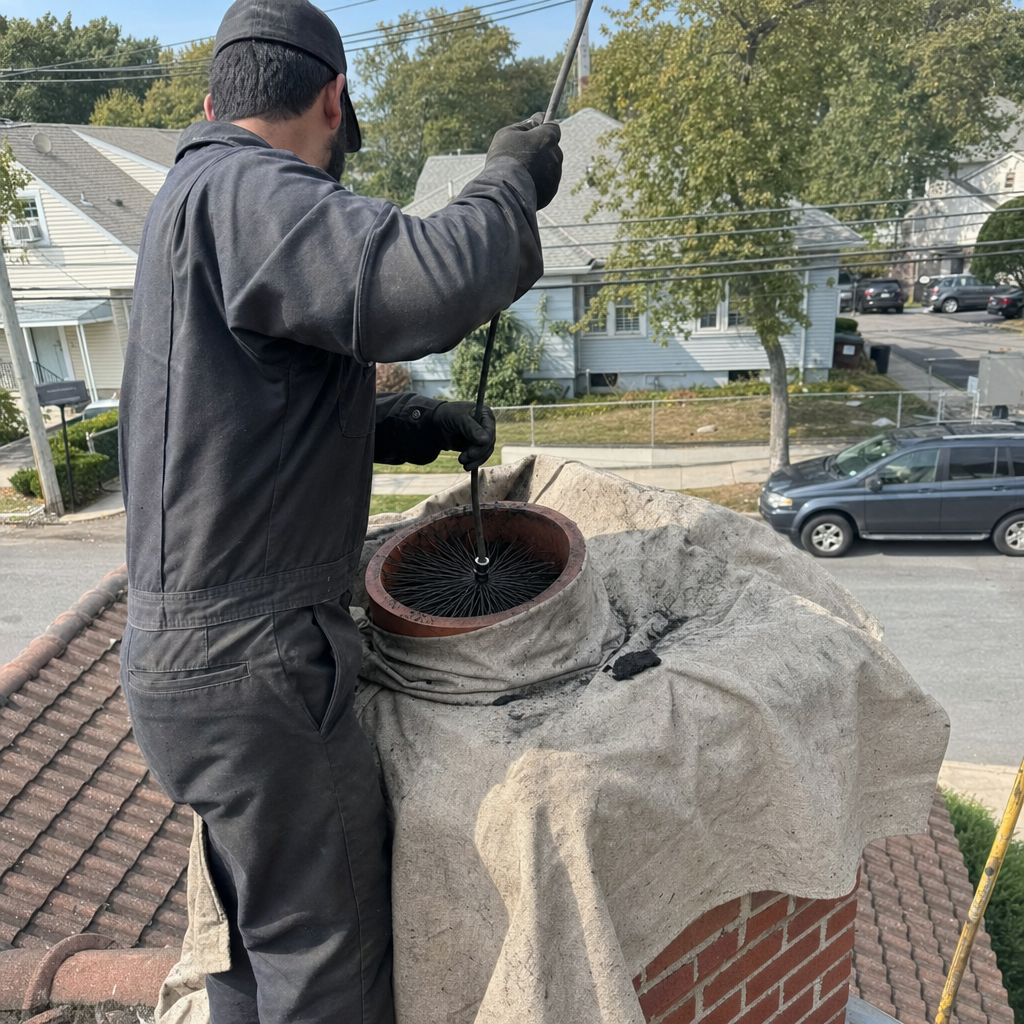
Last March, we got a call from a homeowner in Park Hill who swore her fireplace had developed a “draft problem” overnight. The fire she’d lit for years suddenly pushed smoke into the living room. When Gary climbed the roof, he found her flue wasn’t the issue — the neighboring unit’s long-abandoned flue had lost its cap, creating an open channel that was pulling air across the shared stack and pressurizing her side. Her own flue was loaded with stage-two creosote, but she never saw the warning because the draft change masked the underlying buildup until the smoke finally backed up.
This scenario plays out constantly in Yonkers’s attached housing stock. In neighborhoods like Nodine Hill, Getty Square, and the rowhouse blocks near the Hudson, chimneys were built as shared stacks serving multiple flues across party walls. Most cycled through coal, oil, and gas conversions over the past century, leaving oversized flues that were never properly relined. When one unit’s flue gets left open — cap missing, damper rusted off, or a landlord simply neglecting a vacant apartment — the active flues in that stack behave differently. Cold air drops. Animal smells appear. The draft you counted on last winter feels “off” this year.
These aren’t cleaning signs in the traditional sense. They’re early warnings that the chimney’s operating environment has changed, and that change almost always reveals deferred maintenance that cleaning alone won’t fix. By the time you see smoke in the room, you’ve missed months of detectable signals.
Here’s what to watch for specifically in Yonkers’s shared-stack housing:
- Unexplained cold air from the fireplace when it’s not in use, especially on windy days — the Hudson River westerlies pressurize open flues and force cold air down active ones
- New animal odors or scratching sounds from a flue that never had them before, often indicating a neighbor’s open flue has become a wildlife highway into the shared structure
- Changed draft behavior — fires that used to draw cleanly now need the door cracked, or smoke briefly puffs out at lighting when it never did
- Moisture stains on firebox walls that appear suddenly, not gradually — a sign that an adjacent open flue is funneling river-sourced humidity into the stack
These symptoms warrant inspection before they progress to visible creosote problems or dangerous backdrafting. We document what we find in plain language — if the flue is clear and the issue is purely structural, we’ll say so and explain your options.
Visible Creosote Signs That Mean Different Things in Yonkers’s Old Flues
Once you move past the draft-shift warnings, the standard signs of a dirty chimney apply — but with important local context that changes what “cleaning” actually involves.
Oily black or brown staining on firebox walls is the hallmark of stage-two or stage-three creosote, not light soot. In Yonkers’s oversized coal-era flues — common in pre-1945 housing throughout the city — this buildup accumulates differently than in modern, properly sized chimneys. The larger flue diameter creates cooler gas flow, which condenses more creosote per fire. What looks like “needs a sweep” to a homeowner often requires mechanical removal with chains or rotary tools, not just brushing. We’ve pulled five-gallon buckets of glazed creosote from flues in Nodine Hill three-deckers that a standard sweep wouldn’t touch.
Thick, tar-like deposits that flake off in sheets indicate stage-three glazed creosote — a hardened, fuel-like layer that can ignite at lower temperatures and burns intensely. This isn’t a DIY removal situation. The National Fire Protection Association reports that chimney fires reach 2,000°F, and glazed creosote burns like a blowtorch inside the flue. In Yonkers’s unlined or partially lined brick flues, that heat transfers directly to surrounding framing. We’ve seen spalled brick and blown mortar joints from thermal shock after fires the homeowner didn’t even know happened.
White or gray powdery residue (efflorescence) on exterior chimney brick signals moisture intrusion, not just creosote. Along Yonkers’s Hudson River corridor, persistent river-sourced moisture combined with severe freeze-thaw cycling destroys masonry faster than inland Westchester. If you’re seeing this on the exterior, cleaning needs to accompany a structural assessment — the flue may be compromised, and sweeping a deteriorating chimney without checking liner integrity is asking for debris blockage or carbon monoxide leakage.
Debris in the firebox — bits of brick, mortar chunks, or clay tile fragments — is a post-winter inspection trigger specific to this climate zone. After hard freeze-thaw cycles, crowns crack, flue tiles spall, and mortar joints fail. Finding debris means the chimney’s structural envelope is degrading, and cleaning must be done with care to avoid dislodging more material into the flue. We use video inspection to assess before we sweep when we see this sign.
Gas Appliance Warning Signs Homeowners Routinely Ignore
A significant share of Yonkers’s housing stock converted from coal to oil to gas without proper chimney modifications. The assumption that gas appliances “don’t need chimney maintenance” kills people.
Yellow or flickering flames instead of steady blue on a gas fireplace or boiler indicate incomplete combustion. In a properly vented system, this points to combustion air problems — often a deteriorated or improperly sized flue liner that’s not drafting enough fresh air to support clean burn. The chimney may look “fine” from the room, but liner corrosion, joint separation, or debris blockage from a failed cap can starve the appliance of makeup air.
Soot accumulation around gas appliance vents is never normal. Gas burns cleanly; visible soot means something’s wrong with venting, burner adjustment, or liner condition. We’ve found bird nests, collapsed clay tile sections, and even ice dams in gas-vented flues that homeowners assumed were maintenance-free.
Condensation staining on walls near the chimney chase with gas equipment often means flue gases are cooling too quickly in an oversized flue, causing acidic condensation that attacks mortar and metal liners alike. This is especially common in Yonkers’s converted coal flues, where the cross-sectional area is double or triple what modern gas appliances require. Proper liner sizing with materials like DuraFlex or Olympia Chimney stainless systems fixes the root cause — cleaning alone won’t.
When we inspect gas-vented systems, we check liner condition, cap integrity, and draft performance. If the chimney’s sound and the appliance just needs tuning, we’ll tell you. Our approach is to document what we see, not invent problems.
The Post-Winter Inspection That Yonkers’s Climate Demands
Every April, we field calls from homeowners who lit their first fall fire without looking at the chimney since March. In Yonkers’s ridge-and-valley topography — especially the exposed high ground of Park Hill and Nodine Hill — chimneys take a beating.
The Hudson River corridor’s moisture loads freeze in mortar joints, expand, and spall brick faces. Prevailing westerlies drive rain into capless or poorly capped flues. By spring, the damage is done but not yet visible from inside.
We recommend a specific post-winter check:
- Exterior crown inspection from ground level — hairline cracks widen over one freeze season; visible cracking means water’s already penetrating
- Firebox debris check — any new brick or mortar fragments since last season indicate structural movement
- Cap and flashing visual — missing or displaced caps are entry points for moisture and animals
- Damper operation — rusted or stuck dampers suggest moisture intrusion that will accelerate creosote buildup
If you find debris or damage, don’t assume sweeping is the first step. We use HeatShield refractory repair systems and Gelco stainless caps where appropriate, but only after determining whether the flue is structurally sound enough to clean safely. Sometimes the right call is repair before sweep, or liner replacement that makes future cleaning effective.
What a Proper Chimney Inspection Actually Includes
We get skeptical homeowners who’ve been burned by “inspectors” who walked in, looked up, and pronounced everything fine or everything catastrophic with no middle ground. Here’s what Gary actually does on every inspection:
Roof-level exterior assessment of crown, cap, flashing, and visible flue condition. Interior firebox examination for creosote stage, debris, and masonry damage. Video scan of the flue interior from top or bottom, depending on access, to document liner condition, joint separation, offset, and obstruction. Draft and pressure testing where symptoms suggest venting problems. Written documentation of findings with photos, explained in plain language — what we found, what it means for safety and function, what options exist, and what we’d do if it were our chimney.
Sometimes the answer is: clean it, cap it, check again in a year. Sometimes it’s: this flue is unlined, oversized, and deteriorating — here’s what relining with Famco or DuraFlex components involves, and here’s why delaying creates liability. The key is specificity. “I’ll tell you what I see, not what sells” — that’s the standard Gary set 11 years ago, and it’s why over 1,100 homeowners have left reviews averaging 4.7 stars.
We don’t subcontract inspections to crews working off checklists. Gary leads every job himself, from first sweep to full liner rebuild. Chimney Cleaning & Sweep is our core service, but we bring the same hands-on approach to every level of work.
When Cleaning Isn’t Enough: The Yonkers Code Context
Here’s where Yonkers’s housing stock creates a compliance issue most generic guides ignore. Westchester County building code requires proper flue lining for all solid-fuel and most gas appliances. The pre-war bare-brick and early clay-tile flues common in Park Hill, Nodine Hill, and Getty Square neighborhoods often don’t meet current standards — and cleaning reveals the deficiency rather than fixing it.
We routinely uncover unlined flues, flues with disconnected or missing clay tile sections, and coal-era flues never resized for modern appliances. In these cases, cleaning alone is incomplete. The homeowner needs documented findings and a clear path to code compliance — whether that’s HeatShield resurfacing of a sound but unlined flue, a stainless DuraFlex or Olympia Chimney liner insert, or full rebuild of a deteriorated structure.
We explain the code context without pressuring for immediate full remediation. Sometimes staged work makes sense — cap and sweep now, liner next season when the budget allows, with clear documentation of the safety implications of waiting. What we won’t do is sweep an unlined, deteriorated flue and hand you a certificate saying everything’s fine. That’s not how we work.
FAQs
Chimney cleaning in Yonkers typically ranges from $175 to $325 for a standard sweep, with mechanical creosote removal for stage-two or stage-three buildup running $350 to $550 depending on flue accessibility and buildup severity. Shared-stack inspections or multi-flue rowhouse configurations may add $75 to $150 for proper documentation of adjacent flue conditions. Call (844) 660-6590 for an exact quote — estimates are free, and we’ll tell you if your situation is standard or needs additional scope before we start.
We often schedule within 24 to 48 hours during peak season (September through January), and same-day service is available for suspected blockages or post-chimney-fire situations where the flue can’t be used until inspected. Emergency calls get priority, but we don’t rush inspections — Gary does the work personally, so availability depends on his current job schedule. Call (844) 660-6590 and we’ll give you a realistic timeline.
Resurfacing a sound but unlined or cracked clay-tile flue with HeatShield typically costs 40 to 60 percent less than full stainless steel liner replacement, but it’s only appropriate when the flue structure is fundamentally intact — no major offset, significant spalling, or missing tile sections. For deteriorated flues in Yonkers’s oldest housing, stainless steel inserts from DuraFlex or Olympia Chimney are the longer-term solution and often required for code compliance with solid-fuel appliances. We’ll show you the video scan and explain which category your flue falls into.
The National Fire Protection Association recommends annual inspection for all chimneys, with cleaning frequency based on creosote accumulation — typically every cord of wood burned, or annually for regular use. In Yonkers’s oversized coal-era flues, creosote accumulates faster due to cooler gas flow, so heavy winter use often warrants mid-season inspection. Gas-vented systems need annual inspection too, though cleaning intervals are longer — the critical issue is liner deterioration, which inspection detects before it becomes dangerous.
Ready for a Straight Answer About Your Chimney?
If you’d rather have it looked at, Sterling Chimney Cleaning Yonkers offers a no-pressure assessment in Yonkers — call (844) 660-6590. Gary will inspect it personally, explain what he finds, and tell you honestly whether cleaning, repair, or simple monitoring is the right next step.
Written by Gary Murphy, Owner & Lead Technician at Sterling Chimney Cleaning Yonkers, serving Yonkers, NY.