
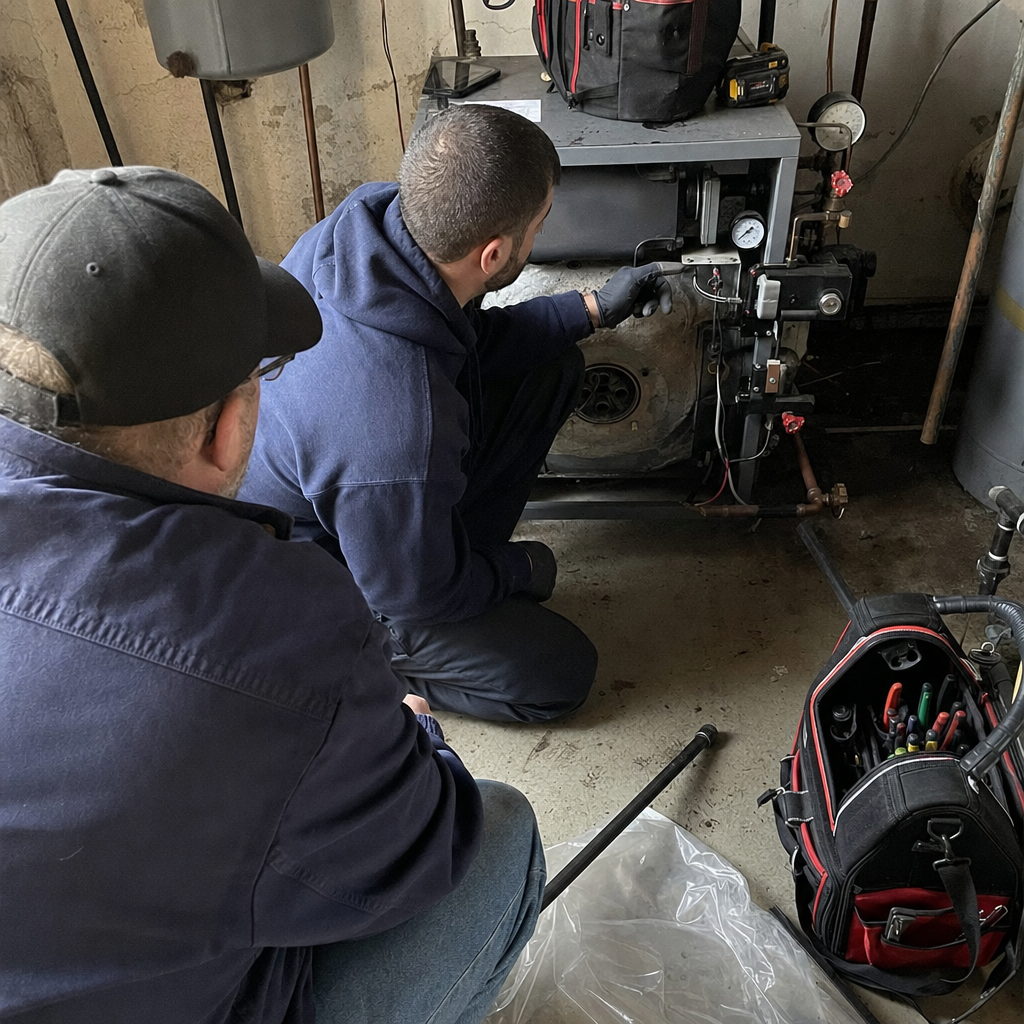
How Often Should You Clean Your Chimney in Yonkers, NY?
Most chimneys in Yonkers need Chimney Cleaning & Sweep services once per year if you use your fireplace or heating appliance regularly. For wood-burning systems, the National Fire Protection Association recommends annual sweeping regardless of apparent condition. Gas and oil systems with properly lined, modern flues can sometimes extend to every two years with light use — but in Yonkers’s pre-war housing stock, we almost never see properly lined, modern flues until we’ve done the first sweep and assessment. Call us at (844) 660-6590 if you’re unsure where your chimney stands.
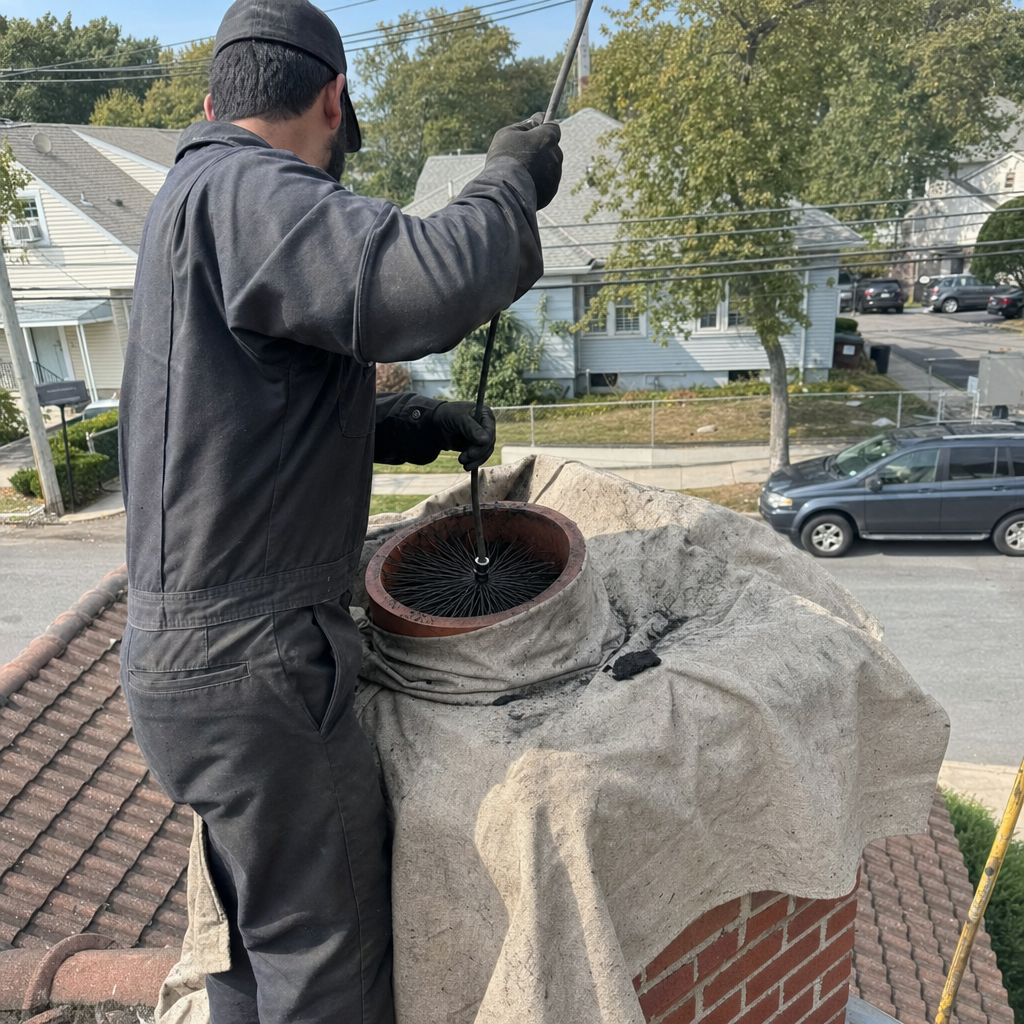
Why “Annual” Doesn’t Mean the Same Thing in a Yonkers Rowhouse
NFPA 211 says annually. We say that for a Yonkers building that’s never had a documented sweep, “annual” starts after you know what you’re actually working with. We’ve done first-ever cleanings on pre-war rowhouses in Park Hill and around Getty Square that were three jobs in one: the sweep itself, the liner assessment, and the code compliance conversation. After that, annual makes sense.
Gary Murphy, Owner & Lead Technician at Sterling Chimney Cleaning Yonkers, grew up in Nodine Hill and has spent 11 years personally inspecting chimneys across this exact housing stock. He picked up the fundamentals through Westchester Community College’s Building Trades program before getting his hands dirty on real jobs across the Hudson Valley. His father was a finish carpenter, which is where Gary got the idea that a tradesman should be able to look a homeowner in the eye and explain exactly what he found and why it matters. That direct, no-upsell approach — “I’ll tell you what I see, not what sells” — is why over 1,100 Yonkers homeowners have left reviews.
The problem with blanket “annual” advice is that it assumes a chimney with a known baseline. In Yonkers’s dense concentration of pre-war attached rowhouses and multi-family buildings, particularly in neighborhoods like Park Hill, Nodine Hill, and around Getty Square, most chimneys have cycled through coal, oil, and now gas over the past century. That leaves oversized, unlined, or improperly converted flues carrying What Is Creosote Buildup? (Yonkers, NY) at a scale virtually absent from the detached-home suburbs immediately to Yonkers’s north and east.
Here’s what that means practically:
- First sweep on an unknown chimney: Treat it as a diagnostic, not maintenance. We regularly find flues sized for coal burners now venting high-efficiency gas appliances — a mismatch that changes everything about how often cleaning is needed.
- After fuel conversion: Gas running through an unlined flue designed for oil produces different condensation patterns. The first season after conversion almost always reveals whether the existing flue can handle the new appliance’s exhaust profile.
- Shared-stack buildings: In attached rowhouses, your flue’s performance depends partly on your neighbor’s. An abandoned, open flue in the same stack funnels cold air and moisture into your active flue, accelerating creosote buildup even with low use.
- Post-first-sweep schedule: Once we know your flue’s actual condition, liner status, and draft behavior, we can give you a real interval — not a national average.
How Yonkers’s Geography and Housing Stock Change the Math
Yonkers’s western edge runs directly along the Hudson River, exposing chimneys in that corridor to persistent river-sourced moisture and severe freeze-thaw cycling that spalls brick faces and blows out mortar joints faster than in inland Westchester communities. The city’s pronounced ridge-and-valley topography — especially the high ground of Park Hill and Nodine Hill — creates erratic wind-draft conditions that accelerate creosote accumulation in flues facing prevailing westerlies off the river.
Poor draft means incomplete combustion, which means more creosote regardless of how clean your fuel burns. We’ve seen gas fireplaces in exposed chimneys on Yonkers high ground accumulate measurable buildup in a single season that might take three years in a sheltered, modern flue.
The oversized flues common in pre-war Yonkers buildings compound this problem. A flue designed for a coal-fired gravity furnace has a cross-sectional area often double what’s needed for a modern gas insert. Slower gas velocity means more time for condensation on flue walls, more surface area for creosote to adhere, and cooler temperatures that keep deposits sticky rather than letting them dry and flake. These flues don’t just need cleaning more often — they need the right cleaning technique, with brushes sized to actually contact the full surface rather than skimming the center.
When we encounter liner deficiencies during that first sweep — which we do on the majority of pre-war Yonkers jobs — the cleaning interval becomes secondary to the repair decision. Westchester County code compliance requires proper lining for most fuel conversions, and we use professional-grade materials like DuraFlex stainless steel liners or HeatShield cerfractory resurfacing when the existing clay tile can be salvaged. The brand matters because these are the systems that will determine your actual cleaning needs for the next decade.
A Practical Framework for Yonkers Homeowners
After 11 years and over 1,100 jobs, we’ve settled on intervals that account for local conditions rather than repeating the NFPA boilerplate. This isn’t about upselling — Gary leads every job himself, and we’ve told plenty of homeowners they’re fine for another year. But we’ve also found dangerous conditions that a generic “annual” schedule would have missed by months.
| System Type & Condition | Recommended Interval | Yonkers-Specific Note |
|---|---|---|
| Wood-burning, any flue type | Annual minimum | Creosote buildup is fuel-dependent and unpredictable; annual sweeping is non-negotiable for insurance and safety |
| Gas, modern lined flue, known good baseline | Every 1–2 years with light use | Rare in pre-war Yonkers stock; most “gas” chimneys here are unlined conversions needing assessment |
| Gas, pre-war unlined flue, post-conversion | First sweep after first season, then annual | The baseline sweep reveals whether condensation patterns require more frequent attention or liner installation |
| Oil, any flue type | Annual | Sulfur deposits combine with moisture to form corrosive acids; Yonkers’s river moisture exacerbates this |
| Seasonal rental or newly purchased pre-war property | Immediate sweep before first fire | No exceptions — unknown occupancy history means unknown fuel history, liner status, and potential blockages |
| Shared-stack rowhouse, any fuel | Annual plus neighbor-flue check | Open or abandoned adjacent flues change draft dynamics; we assess the full stack when accessible |
The “first season, then annually” rule for unknown or converted pre-war chimneys isn’t something you’ll find on generic chimney advice pages. It’s specific to the housing stock we work in daily — the three-deckers, the converted single-families, the attached rows with party-wall stacks that define Yonkers’s residential fabric. Chimney Cleaning & Sweep in Yonkers isn’t a one-size-fits-all service here; the interval depends on what we find when we get eyes on your actual flue.
What We Find When We Clean “Annual” Chimneys That Weren’t Really Annual
Homeowners tell us “it was swept two years ago” or “the previous owner said it was fine.” Then we run the camera and find glazed creosote an inch thick, a disconnected liner section, or a squirrel nest packed above the smoke shelf. These aren’t rare discoveries in Yonkers — they’re the norm in buildings where maintenance history is verbal, not documented.
Glazed creosote is particularly common in the oversized flues we described. It forms when fresh deposits layer over partially burned older layers, creating a hard, tar-like surface that standard brushing won’t remove. It requires specialized chemical treatment or mechanical removal — not a routine sweep. The longer it accumulates, the more hazardous and expensive the remediation. Catching it at the first-season baseline sweep prevents the escalation.
We use Gelco professional-grade creosote modifiers when we encounter early-stage glazing, and Olympia Chimney brushes sized to the actual flue dimensions — not the standard kit that fits in the truck. The tool choice matters because an oversized brush in an oversized flue cleans nothing but the center third, leaving buildup on the shoulders where condensation pools.
From your first sweep to a full liner rebuild, the same operator handles the assessment. That’s the difference between getting a dispatch crew with a checklist and getting Gary Murphy on your roof, looking at your specific flue, your specific exposure, your specific fuel history. 11 years, one specialty. The advice is calibrated to Yonkers conditions, not a national script.
Signs You Might Need Cleaning Sooner Than Your Scheduled Interval
Even with a proper schedule, conditions change. Watch for these Signs your Chimney Needs Cleaning in Yonkers, NY that your flue needs attention before the next planned sweep:
- Smoke entering the room on startup: Indicates blockage, draft reversal, or flue restriction — don’t burn again until inspected
- Strong, acrid odor when the fireplace isn’t in use: Often means creosote deposits are off-gassing in warm, humid conditions; common in river-exposed Yonkers chimneys
- Visible black buildup on the damper or firebox walls: If you can see it here, there’s more where you can’t
- Reduced draft or harder lighting than previous seasons: Could be partial blockage, liner deterioration, or neighbor-flue interference in shared stacks
- White or powdery deposits on exterior brick: Efflorescence from moisture intrusion; in Yonkers’s freeze-thaw climate, this signals mortar joint failure that may be connected to flue liner gaps
Any of these symptoms in a pre-war Yonkers building should trigger a call, not a wait. The housing stock doesn’t forgive deferred maintenance the way newer construction might.
FAQs
Affordable Chimney Cleaning & Sweep in Yonkers, NY typically runs between $200 and $350 for a routine cleaning on a known, accessible flue with no complicating factors. First-time sweeps on pre-war properties with unknown conditions often require additional diagnostic time and camera inspection, which can push the initial visit toward the higher end of that range or slightly above if we discover liner deficiencies or blockages requiring immediate attention. Call (844) 660-6590 for an exact quote on your specific chimney — estimates are free, and we’ll tell you upfront if your situation looks straightforward or needs more than a basic sweep.
We typically schedule within a few days for routine sweeps during off-peak months (March through August), and within 24–48 hours for urgent situations like suspected blockages or pre-winter inspections in September through November. Same-day service is sometimes available depending on Gary’s route that day, but we don’t promise what we can’t deliver — 11 years of Yonkers work has taught us that rushing a chimney inspection serves nobody. If you’re facing an immediate safety concern like smoke backing up into your home, call (844) 660-6590 and we’ll prioritize you or direct you to appropriate emergency resources.
Repair is usually cheaper when the existing clay tile is structurally sound but has isolated gaps or spalling — we use HeatShield cerfractory resurfacing for these cases, which restores a smooth, sealed surface at roughly half the cost of full stainless steel liner replacement. Replacement with a DuraFlex liner becomes the better investment when tile is extensively cracked, shifted, or missing sections, or when the flue is oversized for the current appliance and needs downsizing for proper draft. We make this assessment with a camera inspection during your cleaning, and we’ll show you the footage so you understand exactly why we’re recommending one path over the other. Call (844) 660-6590 to schedule.
If you live in an attached building in Park Hill, Nodine Hill, Getty Square, or similar pre-war neighborhoods, your chimney almost certainly serves multiple flues — yours plus your neighbor’s or neighbors’. The easiest visual check is from the roof: multiple pots or caps on a single chimney structure indicate separate flues in one stack. Inside, a thumping or draft fluctuation when your neighbor’s heating system cycles can also signal shared construction. The critical issue is whether abandoned flues in that stack have been properly capped — open flues funnel cold air, moisture, and animals into the active flue, accelerating creosote buildup and creating blockages. We assess the full stack condition whenever accessible during your sweep. Call (844) 660-6590 if you’re unsure about your configuration.
When to Schedule Your First — or Next — Yonkers Chimney Cleaning
If you’re marking a calendar, mark it for the month before you expect to use your fireplace or heating appliance regularly. For wood-burning households in Yonkers, that’s typically September. For gas and oil systems, any time during the off-season works — but don’t wait until the first cold snap when every chimney company in Westchester is booked two weeks out.
If you’ve never had a documented sweep, if you’ve just bought a pre-war property, if you’ve converted fuels, or if you’re managing a rental with unknown tenant maintenance history — schedule now, regardless of season. The first sweep is diagnostic, and the interval we recommend afterward depends entirely on what we find. That’s not a sales pitch; it’s the reality of working in a housing stock where most chimneys have been through three fuel eras with zero documentation.
Over 1,100 homeowners have trusted us with that first look. Gary leads every job himself, uses materials from recognized professional brands like DuraFlex, HeatShield, Gelco, and Olympia Chimney, and has the hands-on experience to know when a flue is fine for another year and when it’s not. From your first sweep to a full liner rebuild, you’re dealing with the same operator who made the initial assessment — no handoffs, no surprises.
If you’d rather have it looked at than guess, Sterling Chimney Cleaning Yonkers offers a no-pressure assessment in Yonkers — call (844) 660-6590 for a free estimate.
Written by Gary Murphy, Owner & Lead Technician at Sterling Chimney Cleaning Yonkers, serving Yonkers, NY.