
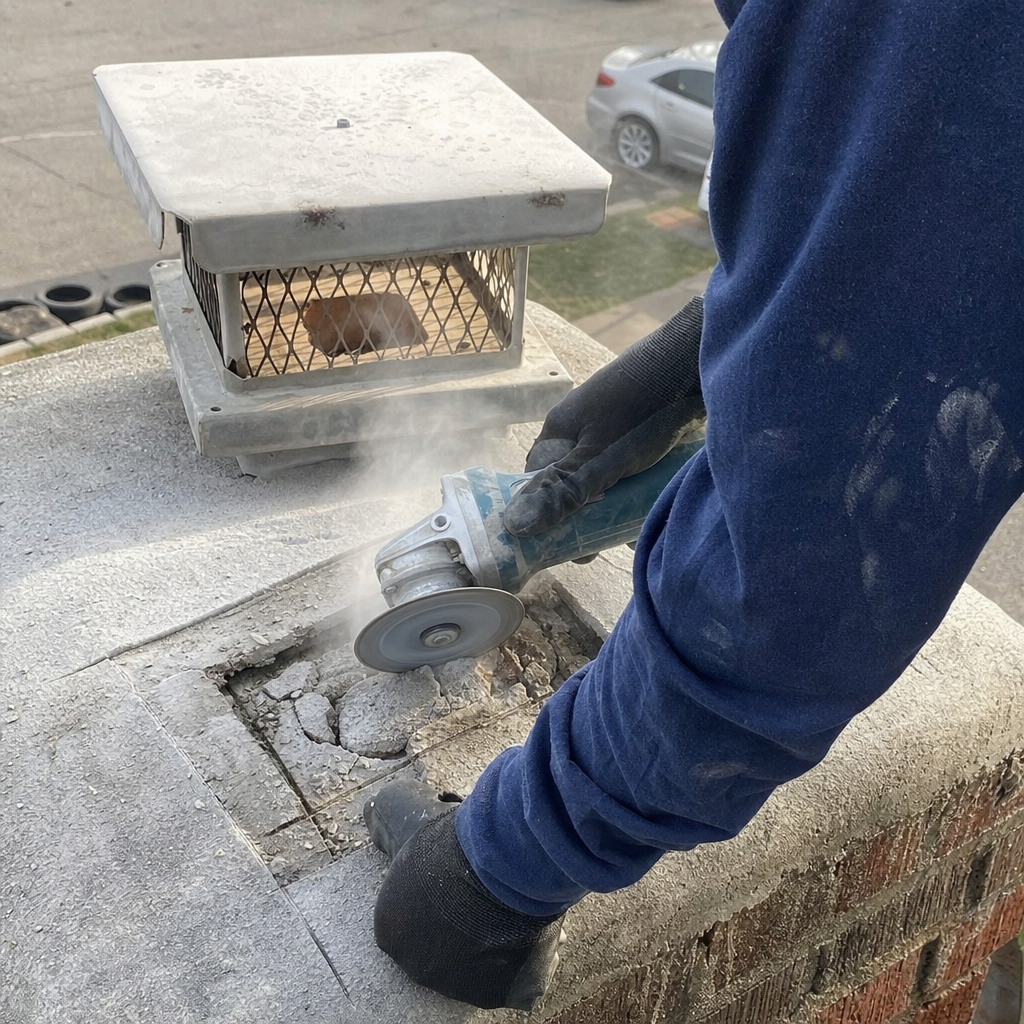
Fast, Reliable Chimney Repair Across Woodside
Chimney repair in Woodside typically runs $850–$3,200 depending on whether you’re looking at mortar repointing, a crown rebuild, or full chimney rebuilding, and most jobs in the 11377 ZIP code can be started within 48 hours. We’re familiar with the specific headaches Woodside homeowners face: the 1920s–1940s brick row houses along Roosevelt Avenue, the semi-detached two-families on the side streets, and the way the elevated 7 train’s vibration works over decades to loosen what looked like solid masonry. Gary Murphy leads every job himself — not a dispatched crew — and we carry HeatShield, Gelco, and Olympia Chimney materials so we’re not waiting on parts while cold weather sets in. If you’re seeing crumbling mortar, water stains on the ceiling near your chimney breast, or you’ve just converted from oil to gas and aren’t sure your flue can handle it, call us at (844) 660-6590 for a free, no-obligation estimate.
Why Sterling Chimney Cleaning Yonkers Is Woodside’s Preferred Chimney Repair Company
Over 1,100 homeowners have trusted us with their chimneys, and our 1,142 verified reviews averaging 4.7 stars reflect the kind of consistency you want when someone is working on the structure that vents carbon monoxide out of your home. In Woodside specifically, we’ve earned repeat calls from homeowners who’ve watched us trace a leak back to a single failed flashing course on a flat-roof row house, or who’ve seen Gary on their roof explaining exactly why their 1930s terra cotta liner can’t handle their new high-efficiency gas furnace.
Our response time to Woodside averages same-day or next-day for urgent issues — carbon monoxide leaks, active water intrusion, or post-storm crown damage. We’re based in Yonkers, but we cross the Queens border regularly for jobs along Northern Boulevard, Roosevelt Avenue, and the residential blocks between them. That proximity matters when you’re dealing with a chimney that’s actively leaking during a January freeze-thaw cycle.
What separates us from competitors who list Woodside in a 50-mile service radius? We know that a “standard” chimney inspection here often means examining two distinct flues in one stack — one for the basement furnace, one for the parlor-floor fireplace — because that’s how these homes were built. We know the soft common brick in 1920s chimneys spalls differently than the harder brick used in post-war construction. And we know that houses within two blocks of the elevated 7 train need their mortar joints checked more frequently than identical homes three blocks farther away. That local specificity is why Woodside customers call us back.
Our Chimney Repair team doesn’t subcontract. Gary Murphy, Owner & Lead Technician, personally assesses every job, climbs every roof, and explains what he’s seeing in plain terms before any work begins.
Our Chimney Repair Services in Woodside
Mortar Repointing
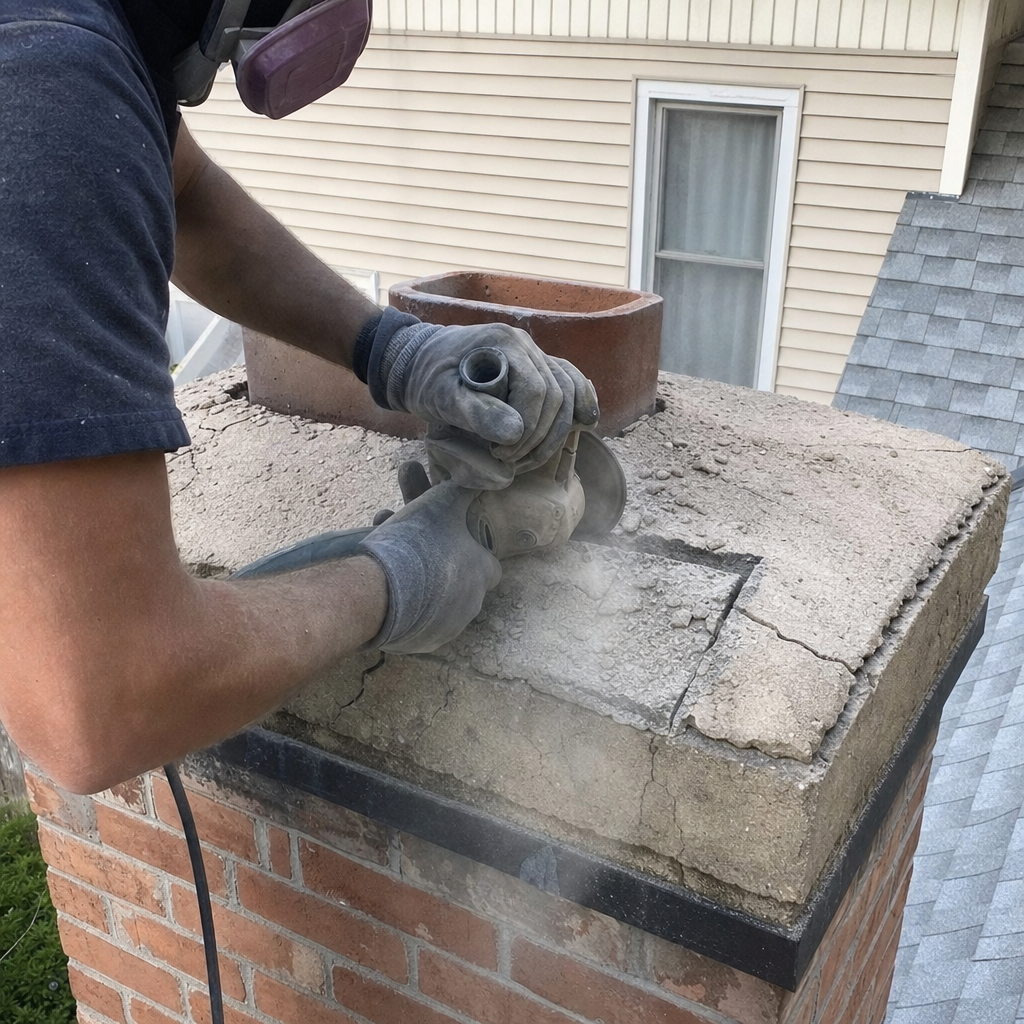
Mortar repointing in Woodside runs $1,200–$2,800 for a typical two-flue row house chimney, depending on how many courses need grinding out and how accessible the stack is from the roof or a scaffold. The original lime-based mortar in 1920s–40s homes has often turned to sand after ninety years, especially on chimneys adjacent to the Roosevelt Avenue elevated line where vibration accelerates the breakdown. We match replacement mortar to the original composition — harder Portland cement on modern chimneys, softer lime mortar on vintage stacks — so the new joints flex and breathe the way the old ones did. On 58th Street just off Roosevelt Avenue, we repointed a 1930s two-family chimney where the vibration from the elevated 7 train had shaken out mortar joints along the party wall, causing a carbon monoxide leak into the neighbor’s attic. We used HeatShield’s high-temperature cement to re-seal the entire flue and installed a stainless steel liner to handle the modern gas furnace’s acidic condensation.
Spalling Brick Repair
Spalling — where the face of the brick pops off due to freeze-thaw moisture penetration — is epidemic on Woodside’s 1920s chimneys. Queens winters pull moisture from the East River and Flushing Bay corridors, and that moisture gets into the soft common brick used in pre-war construction. When temperatures drop below freezing, the water expands, and by March you’re finding brick fragments in your yard or on your flat roof. Spalling repair in Woodside typically costs $800–$1,800 for localized replacement of damaged courses, or $2,500–$4,500 if the damage extends through multiple walls of the chimney. We source matching brick when possible, and we always address the underlying moisture issue — usually failed crown waterproofing or deteriorated flashing — so we’re not back next year replacing bricks we just installed.
Chimney Waterproofing
A proper chimney waterproofing job in Woodside costs $650–$1,400 and should last 7–10 years if the crown and flashing are sound. We use vapor-permeable sealers — not the thick coatings that trap moisture inside — because these old brick chimneys need to breathe. The waterproofing is especially critical for homes within a block of Roosevelt Avenue, where the combination of train vibration and moisture intrusion creates a one-two punch: water gets in through hairline cracks, vibration widens them, and the cycle repeats. We apply waterproofing after any masonry repair, not as a standalone cosmetic fix, because sealing damaged brick just locks the problem inside.
Flashing Repair
Flashing repair on Woodside’s flat-roof and low-slope row houses runs $450–$1,200, with full replacement at the chimney-to-roof intersection hitting $1,500–$2,800. The step flashing and counterflashing in these homes were often installed with the original roof decades ago, and the freeze-thaw cycling in Queens — plus the subtle masonry shifting from elevated-train vibration — separates the metal from the brick or lifts the sealant beads. We see this constantly on the two-family semis along 61st Street and the attached rows near Woodside Avenue. Our flashing work integrates with the existing roofing system; we don’t just caulk over gaps and call it done. When we install new flashing, we use copper or heavy-gauge aluminum and embed it in proper masonry sealant, not the cheap tar products that crack within two winters.
What happens when you call
- 1
A real person answersNo phone trees — you reach a local pro.
- 2
You get an upfront price rangeHonest numbers before anyone is dispatched.
- 3
A background-checked tech heads outLicensed & insured, dispatched right away.
- 4
You approve before work beginsNothing starts until you say go.
Trusted Brands We Service in Woodside
We stock and install professional-grade materials that match what your chimney actually needs, not whatever’s cheapest this quarter. For flue relining and resurfacing, we use HeatShield’s cerfractory sealant — the same high-temperature cement we applied on that 58th Street job — because it bonds to terra cotta and handles the acidic condensation from modern gas appliances better than generic refractory products. For caps, dampers, and exterior fittings, we carry Gelco and Olympia Chimney lines, both made for the Northeast climate cycle. For waterproofing and crown repair compounds, we specify products rated for the thermal expansion these 90-year-old chimneys experience. Keeping these materials on hand means Woodside customers aren’t waiting two weeks for a special order while water keeps coming through the ceiling.
Common Chimney Repair Problems We See in Woodside Homes
- Cracked or spalled brick crowns on 1920s chimneys adjacent to the elevated 7 train. The persistent vibration from heavy rail traffic creates stress fractures in crown concrete and loosens the mortar beds beneath chimney caps — a failure mode we simply don’t see at this frequency in Sunnyside or Jackson Heights, where residential blocks sit farther from elevated lines.
- Chimney-liner collapse from acidic condensation after oil-to-gas conversion. Woodside’s oversized terra cotta flues were designed for oil-burning furnaces; when homeowners switched to gas in the 1980s–90s, the cooler flue gases condensed into sulfuric acid that eats away at the liner. We regularly find collapsed or offset liner sections when inspecting these flues, and the repair requires stainless steel relining with a properly sized insert.
- Flashing separation on flat-roof row houses due to freeze-thaw cycling and shifting masonry. The combination of Queens winter moisture and the subtle but constant vibration from the Roosevelt Avenue line works flashing loose faster than in neighborhoods with stable ground conditions. By the time you see a ceiling stain, the water has often been entering for two or three seasons.
- Carbon monoxide migration through party-wall gaps in attached housing. Because Woodside’s row houses share chimney structures block after block, a failed flue or missing mortar joint doesn’t just affect one unit. We’ve traced CO readings in one home to a deteriorated flue liner in the attached neighbor’s chimney — a risk that’s unique to this density and construction type.
Pricing for Chimney Repair in Woodside, NY
| Service | Typical Range in Woodside | What Affects Cost |
|---|---|---|
| Mortar repointing (two-flue chimney) | $1,200–$2,800 | Height, accessibility, extent of joint failure |
| Spalling brick repair (localized) | $800–$1,800 | Number of courses, brick matching requirements |
| Chimney crown rebuild | $1,500–$3,200 | Crown size, reinforcement needs, flue count |
| Flashing repair | $450–$1,200 | Roof type, extent of separation |
| Full flashing replacement | $1,500–$2,800 | Chimney width, roof intersection complexity |
| Chimney waterproofing | $650–$1,400 | Surface area, prep work needed |
| Stainless steel liner installation | $2,800–$4,500 | Flue length, diameter, appliance connections |
| Partial chimney rebuilding | $3,500–$7,500 | Height, structural integration with roof |
These ranges reflect what we’re quoting in Woodside right now — not national averages, not bait-and-switch numbers. Every estimate we provide is free, in-person, and specific to your chimney. We’ll show you exactly what we found, explain whether repair or rebuilding makes more sense, and give you a written quote before any work starts. Call (844) 660-6590 to schedule.
We Also Serve Cities Near Woodside
We regularly work in Sunnyside — where the housing stock is similar but farther from elevated-train vibration — Jackson Heights, Elmhurst, and East Elmhurst. If you’re in one of these neighborhoods and found this page because you’re comparing chimney repair options across western Queens, the same expertise and direct-owner service apply. Gary Murphy handles the estimates and fieldwork personally, regardless of which side of the BQE you’re on.
Serving Woodside, NY — Our Local Coverage Area
We’re based in the Woodside area and know this community well. Use the map below to see our service coverage — if you’re nearby, we can almost certainly help.
FAQs — Chimney Repair in Woodside
Yes — if your flue is still lined with original terra cotta and you converted from oil to gas, you almost certainly need a stainless steel liner sized for your new appliance. The oversized flue designed for oil combustion runs too cool for gas, causing acidic condensation that destroys terra cotta from the inside out. We’ve replaced collapsed liners in Woodside homes where the homeowner didn’t realize the conversion had created a slow-motion failure. Call (844) 660-6590 and we’ll camera-inspect your flue to confirm its condition — estimates are free.
Yes, and we see the evidence constantly on homes within two blocks of the elevated line. The persistent vibration accelerates mortar-joint loosening, crown cracking, and flashing separation in ways that don’t occur in neighborhoods without heavy rail proximity. If you live on 58th Street, 59th Street, or the blocks immediately adjacent to Roosevelt Avenue, your chimney should be inspected more frequently than the standard annual recommendation. We’ve documented this pattern across dozens of Woodside jobs — it’s real, it’s measurable, and it requires proactive maintenance.
We inspect both flues as part of a single chimney evaluation — we don’t charge separately for each flue in the same stack. Most Woodside two-families and row houses have this configuration: one flue for the basement or cellar furnace, one for the parlor-floor fireplace. Both vent through the same chimney structure, and both need examination because a failure in one can affect the other. Our standard inspection covers the full chimney system, top to bottom, with camera documentation of each flue interior.
For chimneys in the 1920s–1940s housing stock, we recommend mortar-joint inspection every 3–5 years, with repointing typically needed every 15–25 years depending on exposure and proximity to vibration sources. Homes near the elevated 7 train often need attention at the shorter end of that range. If you can scrape mortar out between bricks with a house key, or if you’re finding sand-like debris in your fireplace or cleanout, the joints are failing and water is getting in. Waiting too long turns a $1,500 repointing job into a $6,000 rebuild.
A parge coat — a thin layer of cement applied over the existing crown — is a temporary fix at best and often makes things worse by trapping moisture beneath a new hard surface. For minor hairline cracks with no underlying structural movement, crown sealant can buy you a few seasons. But in Woodside, where train vibration and freeze-thaw cycling actively work against crown integrity, we typically recommend removing the damaged crown and pouring a new reinforced concrete cap with proper overhang and drip edges. That runs $1,500–$3,200 versus $400–$800 for a parge coat, but it solves the problem instead of postponing it. We’ll show you what your crown actually needs when we inspect — call (844) 660-6590 to set it up.
Written by Gary Murphy, Owner at Sterling Chimney Cleaning Yonkers, serving Woodside and western Queens since 2013.