
Fast, Reliable Chimney Liner & Rebuild Across Washington Heights
A chimney liner or rebuild in Washington Heights typically runs $2,800–$7,500 depending on whether we’re resizing an oversized pre-war flue or rebuilding a deteriorated crown and stack. Most Washington Heights jobs take one to two days, and we carry the specialized stainless steel and flexible liner inventory to avoid the multi-week delays common with generalist contractors. Call (844) 660-6590 for a free estimate—Gary Murphy leads every job personally.
We’ve been working in Washington Heights long enough to know the buildings. The six-story brick walk-ups and elevator buildings from the 1920s and 1930s, the shared chimney stacks with three, four, five flues running up from a single boiler room, the tight roof access off West 181st Street and St. Nicholas Avenue. These aren’t suburban chimneys with a single flue and a generous footprint. They’re urban systems—crowded, aging, often modified multiple times as heating technology changed from coal to oil to gas. That history lives in your brickwork, and it determines whether a standard liner install will work or create bigger problems.
Our Chimney Liner & Rebuild team knows how to read that history. We don’t send crews. Gary Murphy shows up, climbs the roof, and inspects what we’re actually dealing with before quoting any work.
Why Sterling Chimney Cleaning Yonkers Is Washington Heights’s Preferred Chimney Liner & Rebuild Company
Washington Heights sits on the highest natural point in Manhattan, exposed to Hudson River winds that chew through mortar joints other neighborhoods never worry about. We’ve rebuilt crowns on buildings where the cap had eroded to powder in under seven years—wind exposure that flat, low-lying areas simply don’t experience. That ridge-top geography matters when we’re selecting materials and designing liner installations.
Over 1,100 homeowners have trusted us across our 11 years in business, and our 1,142 verified reviews at a 4.7-star average reflect jobs done right the first time—not marketing promises. Washington Heights customers specifically mention Gary’s willingness to explain what he found on the roof, show photos, and walk through options without pressure. We’re based in Yonkers, which means we’re typically on-site in Washington Heights within 30–45 minutes of a call. No all-day windows, no wondering if someone’s actually coming.
The building stock here demands that direct accountability. A six-flue stack in a 1927 elevator building isn’t a place for learning on the job. Gary leads every job himself, and that’s the difference between catching a dead incinerator flue masking a collapsed live liner—and missing it entirely.
Our Chimney Liner & Rebuild Services in Washington Heights
Stainless Steel Liner Installation
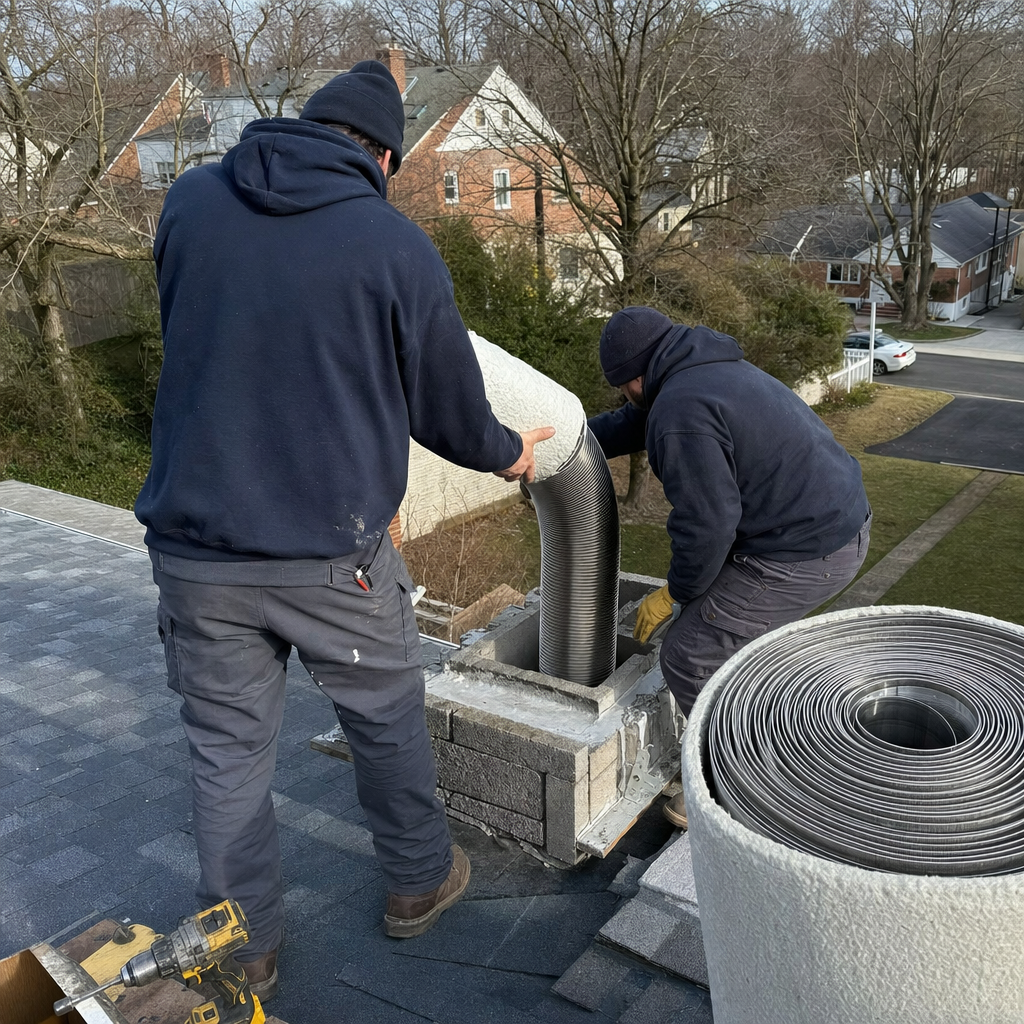
We install DuraFlex and Olympia Chimney stainless steel liners sized specifically for your appliance’s BTU output and flue dimensions. In Washington Heights, this usually means downsizing—those original coal-era flues are massively oversized for modern gas boilers, running too cold and producing acidic condensation that destroys standard clay liners within 5–7 years. A properly sized stainless liner runs hotter, drafts better, and eliminates the condensation cycle that’s eating your stack from the inside. Typical range: $2,800–$4,200 for a standard residential installation in Washington Heights.
Flexible Liner Systems
Some Washington Heights buildings have offset flues, tight cleanout access, or structural constraints that make rigid stainless steel impractical. Flexible liners navigate these obstacles without compromising draft performance. We use HeatShield-compatible flexible systems where appropriate, and we’ve installed them in buildings with basement boiler rooms so cramped the original masons must have worked by feel. The key is matching the liner diameter to your appliance—never forcing an off-the-shelf size because it’s what the truck carries.
Liner Replacement
When an existing liner has failed—cracked clay tiles, corroded corrugated metal from a previous install, or complete collapse—we extract and replace. In Washington Heights, we regularly find liners that were “replaced” decades ago by simply dropping a smaller flex pipe into the existing flue and calling it done. The old debris stays, the new pipe drafts poorly, and the building owner wonders why they’re still getting smoke complaints from the third floor. We remove the failed material, inspect the surrounding masonry, and install a complete system. Typical replacement: $3,200–$5,500.
Partial Chimney Rebuild
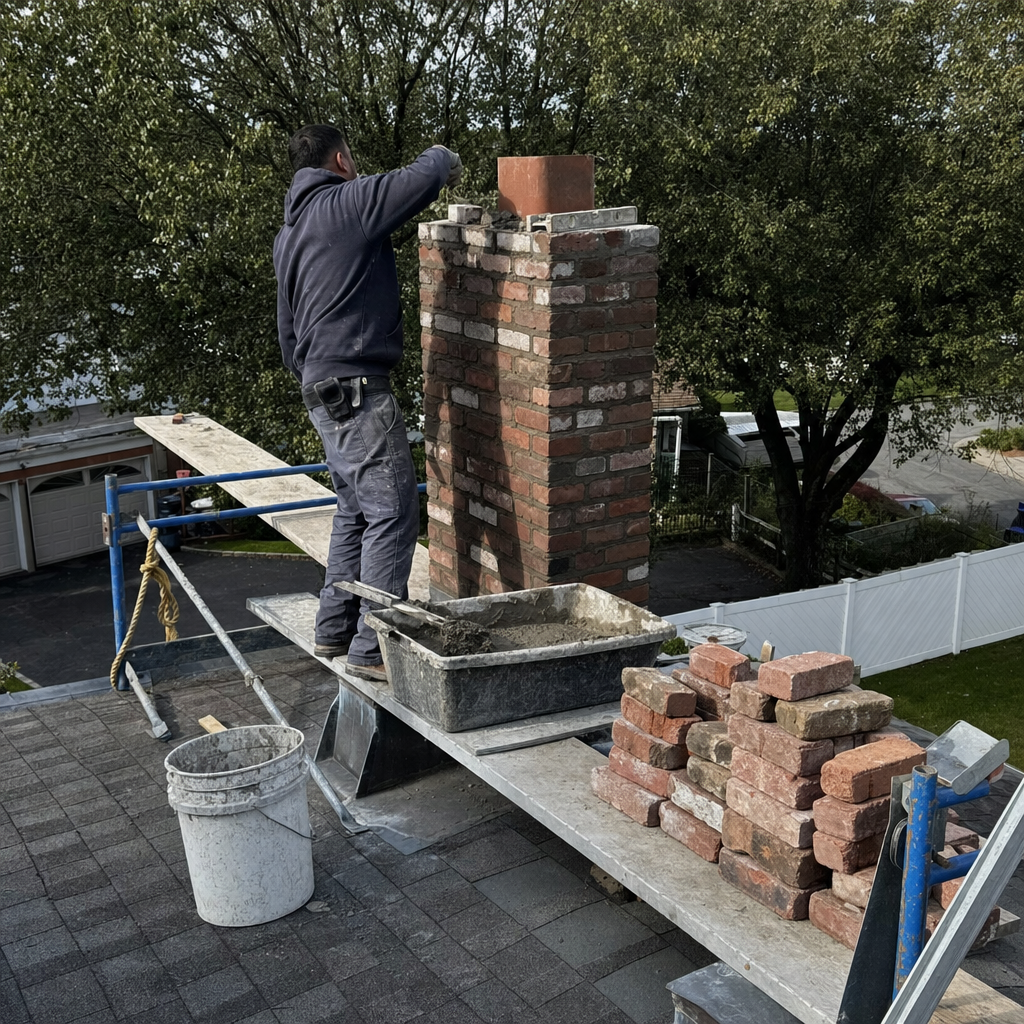
The exposed crowns and upper courses of Washington Heights chimneys take a beating. Hudson River winds drive rain into hairline mortar cracks, freeze-thaw cycles expand them, and before long you’re looking at spalled brick, deteriorated crown wash, and water infiltration that’s compromising everything below. Our partial rebuilds address the damaged section—usually the top 3–6 feet—using matching brick where possible and poured concrete or Gelco pre-formed crowns designed for this wind exposure. We rebuilt the upper stack of a West 175th Street building where the crown had disintegrated so completely the flue tiles were visible from the sidewalk. Typical partial rebuild: $4,500–$7,500.
What happens when you call
- 1
A real person answersNo phone trees — you reach a local pro.
- 2
You get an upfront price rangeHonest numbers before anyone is dispatched.
- 3
A background-checked tech heads outLicensed & insured, dispatched right away.
- 4
You approve before work beginsNothing starts until you say go.
Trusted Brands We Service in Washington Heights
We stock and install professional-grade materials because Washington Heights buildings punish anything less. Our inventory includes DuraFlex stainless steel liners for standard gas conversions, HeatShield cerfractory resurfacing products for flues that need structural reinforcement without full replacement, and Gelco chimney caps and crowns engineered for heavy wind exposure. We also work with Famco and Olympia Chimney components for specialized applications. Having these materials on hand means we’re not waiting two weeks for a distributor while your boiler is shut down—we measure, cut, and install in the same visit. For the pre-war housing stock in 10033 and surrounding blocks, that availability matters. These buildings don’t have backup heat.
Common Chimney Liner & Rebuild Problems We See in Washington Heights Homes
- Dead incinerator flues mistaken for active boiler flues. NYC banned apartment incinerators in 1993, but many buildings simply bricked off the roof opening and left the shaft in place. Superintendents shine a flashlight down what they think is the boiler flue, see an apparently clear passage, and miss the collapsed liner or severe blockage in the live stack running alongside it. We’ve found debris-choked incinerator shafts hiding active flue failures that had been dumping carbon monoxide for years.
- Cold, oversized flues destroying liners from condensation. Those generous coal-era dimensions that vented high-heat exhaust beautifully now run far too cool for efficient gas equipment. The result is continuous acidic condensation—literally dilute sulfuric acid—that eats clay tiles, corrodes metal, and saturates surrounding masonry. Standard 6″ or 8″ liners in 12″x16″ flues don’t solve this; proper downsizing does.
- Wind-driven mortar erosion on exposed ridge-top stacks. Washington Heights’s elevation above the Hudson creates persistent wind loading that accelerates crown deterioration and opens mortar joints. We’ve repointed stacks where the pointing had receded ¾” from wind abrasion alone—damage that would take decades in protected locations.
- Downdraft-related sooting in ground-floor apartments. The combination of oversized flues, damaged crowns, and ridge-top wind exposure produces reverse airflow that pushes combustion byproducts into lower units. Residents smell “something from the boiler room” and blame the super; the actual problem is a chimney system that can’t maintain consistent draft.
Pricing for Chimney Liner & Rebuild in Washington Heights, NY
| Service | Typical Range in Washington Heights | What Affects Cost |
|---|---|---|
| Stainless steel liner (standard gas boiler) | $2,800–$4,200 | Flue height, number of offsets, diameter required |
| Flexible liner with offset navigation | $3,200–$4,800 | Complexity of flue path, access constraints |
| Liner replacement (removal + new install) | $3,200–$5,500 | Condition of existing material, masonry repairs needed |
| Partial rebuild (crown + upper courses) | $4,500–$7,500 | Height of damage, brick matching requirements, cap specification |
| Full chimney rebuild | $8,500–$15,000+ | Stack height, scaffolding needs, flue count, NYC permit requirements |
These are real numbers for work we’ve completed in 10033 and adjacent Washington Heights blocks. Every building differs—flue count, access, existing damage—but we don’t quote blind. Gary Murphy inspects on-site, shows you what he’s found, and delivers a fixed written estimate before any work begins. Estimates are free. Call (844) 660-6590 to schedule.
Factors that push Washington Heights jobs toward the higher end: multiple flues requiring individual liners, buildings where the dead incinerator shaft must be properly sealed at the roofline, and jobs requiring NYC Department of Buildings permit filing for structural rebuilds. We handle permit applications as part of our project management—one less thing for your superintendent to track.
We Also Serve Cities Near Washington Heights
Our chimney liner and rebuild work extends throughout the surrounding Bronx and upper Manhattan neighborhoods. We regularly service Morris Heights, University Heights, Morrisania, and East Tremont—all within our standard response area. The same pre-war building stock, shared chimney challenges, and direct owner-led service apply across these communities.
Serving Washington Heights, NY — Our Local Coverage Area
We’re based in the Washington Heights area and know this community well. Use the map below to see our service coverage — if you’re nearby, we can almost certainly help.
FAQs — Chimney Liner & Rebuild in Washington Heights
Your building’s second flue was almost certainly an apartment incinerator shaft, banned by NYC in 1993. Rather than remove it, most buildings simply bricked off the roof opening and left the shaft in place inside the shared stack. The problem: that dead flue now shares wall space with your active boiler flue, and its condition—collapsed, debris-filled, or partially blocked—directly affects draft performance and safety in the live stack. Call (844) 660-6590 and we’ll inspect both with a camera to tell you what’s actually happening in there.
Yes, if your building is typical Washington Heights pre-war construction. Those flues were engineered for coal or heavy fuel oil burning at 1,000°F+; modern gas equipment runs 300–500°F. The excess volume cools exhaust below its dew point, creating acidic condensation that destroys clay liners and mortar within 5–7 years. A properly sized stainless steel liner restores correct flue temperature and eliminates the condensation cycle. We measure your appliance output and specify exact diameter—never guess.
Washington Heights sits 200+ feet above the Hudson on exposed Manhattan schist, and that elevation creates persistent wind loading you don’t see in flatter Manhattan neighborhoods. The result is accelerated mortar erosion, damaged crowns, and frequent downdraft conditions that push smoke and sooting into lower-floor apartments. We specify wind-resistant cap designs and heavier crown construction for Heights buildings—standard suburban caps don’t survive here.
No. We relined a six-flue shared stack in a 1927 elevator building on West 175th Street near the George Washington Bridge. The owner’s gas boiler was backdrafting sooting into a first-floor apartment; we discovered the adjacent incinerator flue was completely clogged with debris, masking a collapsed liner in the live stack that had gone unnoticed for years. We installed a new DuraFlex stainless steel liner and sealed the dead flue at the roof, ending the backdraft problem. The incinerator flue and boiler flue are separate systems; clarity in one means nothing about the other. Get a camera inspection of the active flue specifically.
Cumulative moisture damage from decades of oversized-flue condensation, often hidden behind apparently sound exterior brick. By the time you see interior staining or smell boiler-room odors, the liner has usually failed and moisture has compromised the inner wythes of masonry. The biggest risk is partial repair—replacing a liner without addressing the saturated surrounding brick, which fails within a few years and requires reopening everything. We assess the full stack condition before recommending scope of work. Call (844) 660-6590 for an inspection and honest assessment of what you’re actually facing.
Written by Gary Murphy, Owner at Sterling Chimney Cleaning Yonkers, serving Washington Heights and surrounding neighborhoods since 2013.