
Fast, Reliable Chimney Liner & Rebuild Across Long Island City
Chimney liner installation and rebuild in Long Island City typically costs $2,800–$7,500 depending on flue height and liner type, with most jobs completed in one to two days. Our Chimney Liner & Rebuild team serves the 11101, 11109, and 11120 ZIP codes with same-week scheduling and free on-site estimates. If you’re smelling smoke in your unit, seeing water stains around the fireplace, or your building just failed NYC DOB inspection after a fuel conversion, call us at (844) 660-6590 — Gary Murphy leads every job personally, and we’re familiar with the access constraints, parking headaches, and unique flue systems that define chimney work in Long Island City.
Long Island City isn’t like the rest of Queens. The building stock here splits between pre-war brick walk-ups with shared common flues and converted industrial lofts where original commercial-grade chimney systems were never designed for residential gas appliances. We’ve spent 11 years specializing exclusively in chimney work, and the past several of those navigating LIC’s specific challenges: oversized clay flues venting undersized residential boilers, salt-air erosion on waterfront stacks, and DOB inspections that fail buildings where multiple units share a single unlined flue. Gary Murphy shows up himself — not a subcontracted crew — and he’s worked on Jackson Avenue lofts, 44th Drive walk-ups, and the converted warehouse buildings near the Anable Basin.
Why Sterling Chimney Cleaning Yonkers Is Long Island City’s Preferred Chimney Liner & Rebuild Company
Owner on every job. Gary Murphy is both owner and lead technician. When you call (844) 660-6590, you’re talking to the person who’ll be on your roof, measuring your flue, and making the call on whether you need a liner repair or full rebuild. No dispatcher. No crew you didn’t meet during the estimate. That matters in Long Island City, where building access is tight, superintendents want accountability, and a misdiagnosed flue problem can delay your Certificate of Occupancy for weeks.
Proven track record at scale. Over 1,100 homeowners have trusted us — 1,142 verified reviews averaging 4.7 stars. That’s not volume for volume’s sake; it’s depth of experience across every chimney configuration Queens and Westchester throw at us. In Long Island City specifically, we’ve relined lofts that failed DOB inspection after oil-to-gas conversions, rebuilt spalling crowns on pre-war multi-family buildings, and replaced shared flue systems in buildings where every unit’s heat had to stay on through the job.
Response time that respects your schedule. We typically reach Long Island City within 45–60 minutes from our Yonkers base during standard scheduling windows. We know the Queens-Midtown Tunnel backup patterns, the alternate routes via the RFK Bridge, and the loading-zone realities on Vernon Boulevard. We’ll work with your building’s access restrictions — freight elevators, alley loading, weekend superintendent hours — rather than showing up unprepared and burning your appointment slot.
Material expertise that matches the problem. We install DuraFlex stainless steel liners, HeatShield cerfractory resurfacing systems, and Gelco components — brands chosen because they perform under the specific stress Long Island City chimneys face: acidic condensate from cold flues, salt-air mortar erosion, and the thermal cycling of converted industrial systems. We don’t source whatever’s cheapest; we source what solves the actual failure mode we’re seeing on your roof.
Our Chimney Liner & Rebuild Services in Long Island City
Stainless Steel Liner Installation
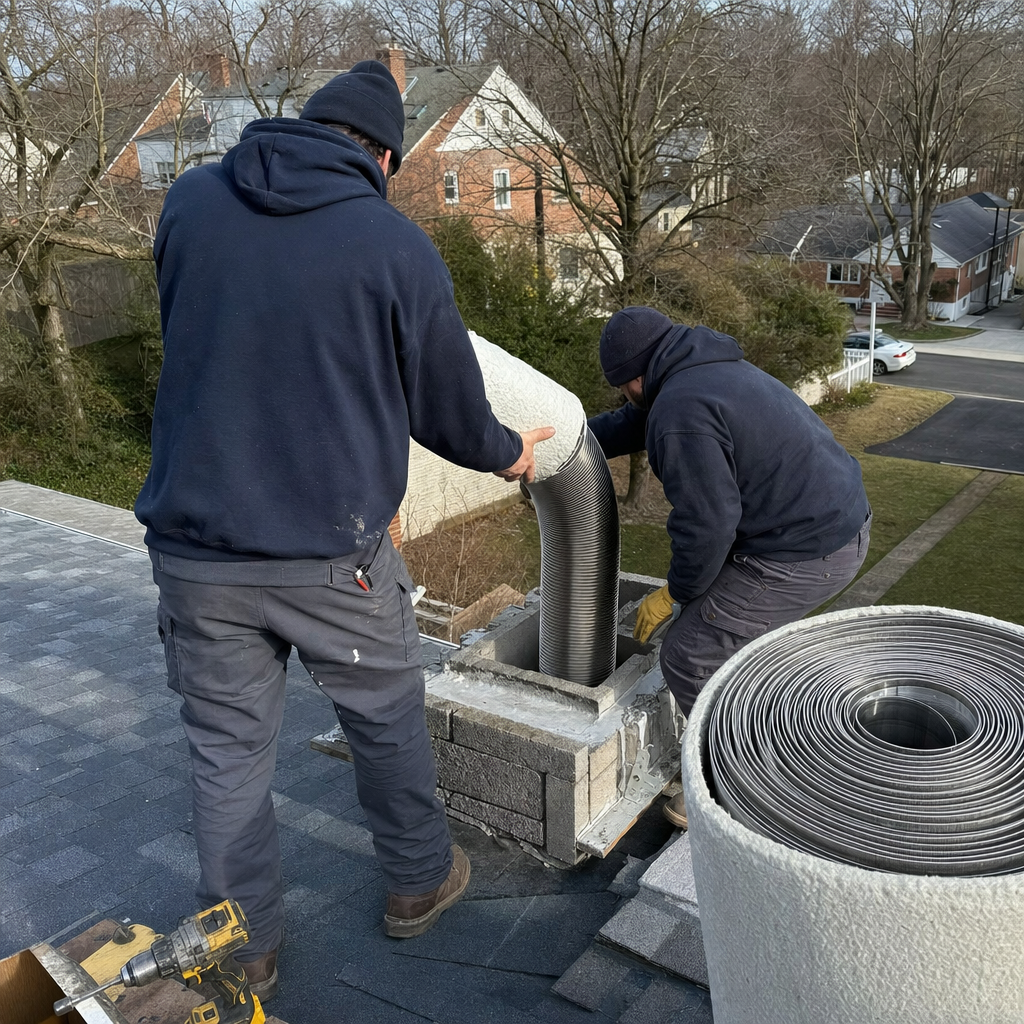
Stainless steel liner installation is our most common call in Long Island City, and for specific reasons. The converted industrial lofts throughout 11101 and 11120 — those former factories and warehouses along Jackson Avenue, 21st Street, and the Queensboro Plaza corridor — retain original clay flues sized for million-BTU industrial oil burners. When a 120,000 BTU residential gas boiler vents into that massive flue, most of the clay surface stays cold. Moisture condenses. Acidic condensate pools. Sulfur compounds from any residual oil residue eat the clay tiles. We install 316Ti or 304-grade stainless steel inserts — typically DuraFlex — to properly size the flue for the appliance actually connected to it. This stops condensation, improves draft, and satisfies NYC DOB requirements for post-conversion inspection. We relined a 1920s factory-turned-loft on Jackson Avenue in 11101, where the original 14-inch clay flue served a 1,000,000 BTU oil burner now replaced by a 120,000 BTU gas boiler. We installed a 6-inch DuraFlex stainless steel liner with an insulated top plate to solve persistent acidic condensate pooling and pass NYC DOB inspection.
Flexible Liner Solutions
Flexible liners solve the access problem that rigid stainless can’t. Many Long Island City buildings — especially the narrow walk-ups on 47th Avenue and the attached townhomes near Sunnyside’s border — have chimney offsets, tight cleanout doors, or flues that shift angle between floors. A flexible DuraFlex liner navigates these bends without dismantling walls or breaking through masonry. We also use flexible liners in buildings where the roof hatch is too small for rigid sections, a common constraint in LIC’s older multi-family stock where original construction never anticipated future liner replacement.
Liner Replacement & Relining
Liner replacement becomes necessary when existing clay tiles are spalled, cracked, or mortar joints have deteriorated to the point of flue gas leakage. In Long Island City’s pre-war multi-family buildings — the 1910s-to-1940s brick walk-ups concentrated south of Queens Plaza — shared flue systems compound the risk. One compromised flue serving multiple units can backdraft carbon monoxide into a neighboring apartment. We replace these systems with properly sized individual liners or, where code permits, a single high-quality shared liner with proper separation and inspection access. We coordinate with building management to minimize tenant disruption, and we document everything for DOB compliance.
Partial Chimney Rebuild
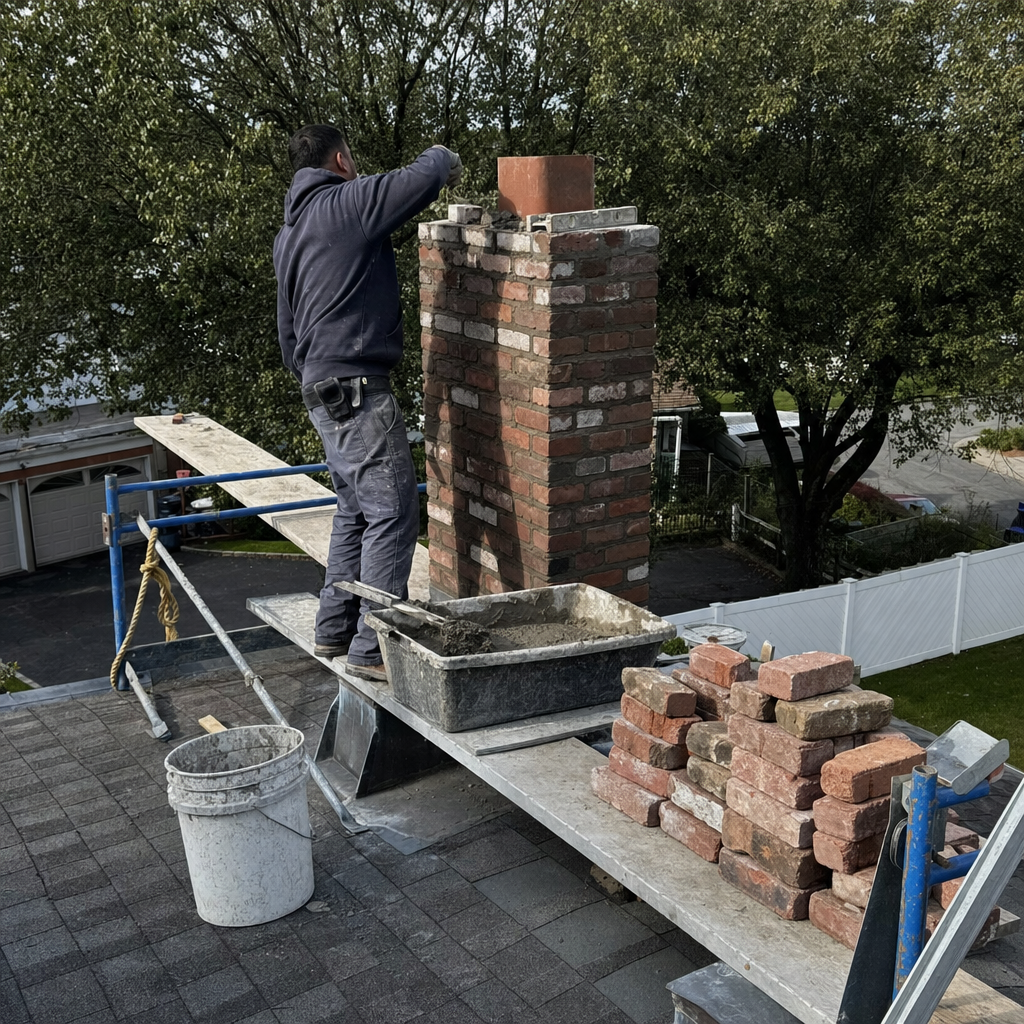
Partial rebuilds address structural failure above the roofline. In Long Island City, the East River waterfront exposure hits chimney crowns and upper courses hardest. The persistent moisture and mild salt air — amplified by the wind tunnel between new high-rise development and the waterfront — drives rain into mortar joints at rates we don’t see in inland Astoria or Woodside. Spalling brick, eroded crowns, and rusted flue tops are the result. We rebuild from the roofline up, replacing damaged brick, pouring new concrete crowns with proper drip edges, and integrating the liner termination to shed water rather than collect it.
Full Chimney Rebuild
Full rebuilds are rare but necessary when the entire stack has compromised structural integrity. We’ve done full rebuilds on Long Island City buildings where decades of deferred maintenance, combined with salt-air erosion and freeze-thaw cycling, left chimneys leaning or separating from the building envelope. These jobs require scaffolding, DOB permitting, and careful coordination in dense neighborhoods where sidewalk sheds and street closures affect foot traffic and business operations. Gary Murphy manages these projects personally, from permit application through final inspection.
What happens when you call
- 1
A real person answersNo phone trees — you reach a local pro.
- 2
You get an upfront price rangeHonest numbers before anyone is dispatched.
- 3
A background-checked tech heads outLicensed & insured, dispatched right away.
- 4
You approve before work beginsNothing starts until you say go.
Trusted Brands We Service in Long Island City
We work with professional-grade product lines because material choice determines whether a liner lasts 15 years or fails in 5. In Long Island City, where many flues operate at the edge of their design envelope, that margin matters. We install DuraFlex stainless steel liners for their corrosion resistance in condensing environments — critical for those cold, oversized flues in converted lofts. HeatShield cerfractory resurfacing lets us restore clay flue surfaces when full relining isn’t structurally necessary or budget-feasible. Gelco components give us reliable termination caps and top plates that seal properly against wind-driven rain. We stock common diameters and fittings locally, so Long Island City jobs aren’t waiting on shipping when a building’s heat is offline.
Common Chimney Liner & Rebuild Problems We See in Long Island City Homes
- Oversized original clay flues cause cold-surface condensation and soot buildup when venting residential gas appliances. The 14-inch and 16-inch flues designed for industrial oil burners in LIC’s converted lofts never reach proper operating temperature with a 100,000 BTU gas boiler. The result is chronic wetness, acidic condensate, and accelerated liner deterioration that standard cleaning can’t fix.
- Salt-air exposure on East River waterfront accelerates mortar joint erosion and crown spalling. Buildings within a few blocks of the waterfront — especially near Anable Basin, Gantry Plaza, and the Hunter’s Point South development — see mortar degradation rates we’d expect closer to a coastal environment than inland Queens. Crown cracks develop faster, and water infiltration follows.
- Shared flues in pre-war multi-family buildings fail DOB inspection if not sized correctly for multiple gas conversions. When a building converts from #4 oil to gas under Local Law 97 pressure, the shared flue that served four oil-fired boilers may not safely handle four gas appliances without proper relining and sizing. We’ve seen buildings held up at inspection because the flue was treated as “grandfathered” when it wasn’t.
- Wind tunnel effects between high-rise developments drive rain into chimney tops at unusual angles. The density of new construction along the Queens West and Court Square corridors has changed wind patterns. Standard chimney caps and crown designs that worked for decades now allow water entry during storms. We specify wind-resistant caps and extended shrouds where standard designs fail.
Pricing for Chimney Liner & Rebuild in Long Island City, NY
Here’s what chimney liner and rebuild work actually costs in the Long Island City market, based on jobs we’ve completed in 11101, 11109, and 11120:
- Stainless steel liner installation (single flue, standard height): $2,800–$4,200
- Flexible liner with offsets or difficult access: $3,200–$5,000
- Liner replacement with flue repair (clay tile removal, masonry patching): $3,500–$5,500
- Partial chimney rebuild (crown, upper courses, liner integration): $4,500–$7,500
- Full chimney rebuild (structural, with scaffolding and permits): $8,500–$15,000+
What moves you within these ranges: flue height (LIC’s five- and six-story walk-ups run taller than suburban standards), access complexity (freight elevator vs. roof hatch vs. exterior scaffolding), and whether the job requires after-hours or weekend scheduling to minimize tenant disruption. We don’t quote over the phone for liner work — we need to camera-inspect the flue, measure the appliance output, and verify clearances. The inspection and estimate are free. Call (844) 660-6590 to schedule.
We Also Serve Cities Near Long Island City
We regularly work in Sunnyside (shared flue systems in the pre-war garden apartments), Astoria (Greek-owned multi-family buildings with specific management coordination needs), Woodside (mixed residential-commercial chimneys near the LIRR corridor), and Hell’s Kitchen in Manhattan (high-rise exhaust systems and rooftop access logistics). If you’re near Long Island City and need chimney liner or rebuild work, we likely know your building type.
Serving Long Island City, NY — Our Local Coverage Area
We’re based in the Long Island City area and know this community well. Use the map below to see our service coverage — if you’re nearby, we can almost certainly help.
FAQs — Chimney Liner & Rebuild in Long Island City
Your original clay flue was sized for an industrial oil burner producing high-temperature, high-volume exhaust — typically 1,000,000+ BTU — and the large diameter kept the flue surface hot enough to stay dry. Your new gas boiler produces lower-temperature, wetter exhaust at a fraction of that volume, so most of the flue stays cold, condenses moisture, and accumulates acidic residue that degrades clay tiles and violates NYC DOB venting codes. We solve this by installing a properly sized stainless steel liner that maintains adequate temperature and draft for your actual appliance. Call (844) 660-6590 for a free flue inspection and exact quote.
The persistent moisture and mild salt air in waterfront Long Island City accelerate mortar joint erosion and spalling in exposed brick chimney stacks, especially on pre-war buildings, and the wind tunnel effect between dense high-rise development and the waterfront drives rain into chimney crowns and caps at higher rates than inland Queens neighborhoods. This external damage compromises the liner’s support structure and allows water to reach the flue interior, where it combines with combustion byproducts to accelerate corrosion. We address this with crown rebuilds using proper drip edges, corrosion-resistant liner materials, and caps designed for wind-driven rain. Call (844) 660-6590 for a free estimate.
Not always — NYC DOB allows properly sized shared flues under specific conditions, but the flue must be large enough to handle the combined appliance input and must maintain proper draft for all connected units without backdrafting. Many Long Island City buildings fail inspection because a shared flue sized for four oil boilers was assumed adequate for four gas conversions without recalculation or relining. We evaluate the total connected load, the flue geometry, and the venting configuration to determine whether a single relined shared flue or individual liners are required for your building. Call (844) 660-6590 to schedule a multi-unit assessment.
A full rebuild requires complete demolition of the existing stack to the roofline or below, structural assessment of the supporting framework, reconstruction with matching or compatible brick, pouring a new concrete crown with proper slope and drip edge, and installing a new liner system sized for the current appliances — plus DOB permits, scaffolding, and coordination with building management for access and tenant notification. In Long Island City’s dense environment, we also navigate sidewalk shed requirements, loading restrictions, and the logistics of material delivery in alleys or through freight elevators. Gary Murphy manages these projects personally from permit to final inspection. Call (844) 660-6590 to discuss your building’s specific situation.
We factor LIC’s access realities into every job: we schedule around tunnel traffic patterns, confirm freight elevator availability with your superintendent, and bring liner sections sized to fit through standard roof hatches or stairwells rather than assuming crane or boom access. For buildings with alley loading only, we coordinate delivery timing and carry materials by hand if needed. We’ve worked in enough Long Island City buildings to know that a “standard” approach fails here — preparation is everything. Call (844) 660-6590 and we’ll walk through your building’s specific access before we schedule.
Written by Gary Murphy, Owner at Sterling Chimney Cleaning Yonkers, serving Long Island City and surrounding Queens neighborhoods since 2014.