
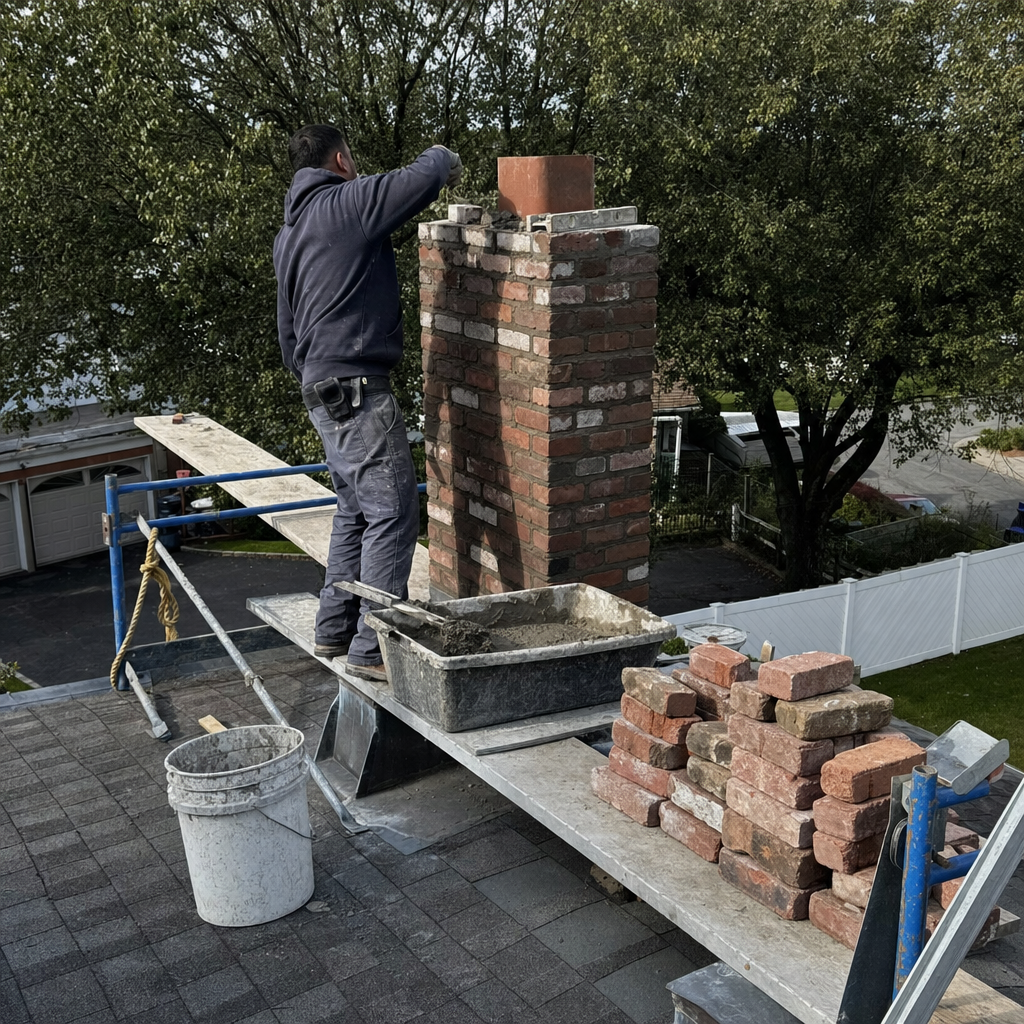
Fast, Reliable Chimney Liner & Rebuild Across Harlem
A chimney liner rebuild in Harlem typically runs $2,800–$7,500 depending on whether we’re dropping a stainless steel liner into an existing stack or rebuilding from the roofline up. Most Harlem jobs take 1–3 days once permits are sorted, and we can usually inspect within 48 hours of your call. If you’re smelling smoke in your apartment when the heat kicks on, or your building’s shared stack is venting multiple units through century-old terra-cotta, that’s not a maintenance issue — it’s a safety issue that needs eyes on it now. Call us at (844) 660-6590 for a free estimate.
We’ve worked on enough Harlem chimneys to know the neighborhood’s housing stock by heart. The pre-war brick rowhouses and tenement walk-ups around West 138th, Lenox Avenue, and the blocks near Marcus Garvey Park weren’t built for modern gas systems. Their original masonry stacks were engineered for coal-burning furnaces, and too many fuel conversions over the decades skipped the flue relining step entirely. That leaves us with dangerously oversized, unlined, or crumbling terra-cotta flues now handling gas appliance exhaust — a failure pattern concentrated in this exact housing vintage and virtually absent anywhere they broke ground after 1940.
Why Sterling Chimney Cleaning Yonkers Is Harlem’s Preferred Chimney Liner & Rebuild Company
Over 1,100 homeowners have trusted us with their chimneys, and our 1,142 verified reviews at a 4.7-star average reflect what happens when the same person who quotes the job climbs the ladder to do it. Gary Murphy leads every job himself — not a dispatched crew working under a brand name. When you call about your brownstone on Strivers’ Row or your six-story walk-up near 125th Street, Gary’s the one who shows up, assesses the flue, and decides whether a liner drop or full rebuild is the right call.
We’re familiar with the specific headaches Harlem buildings present: shared multi-flue stacks serving four to six units, original terra-cotta tiles that have taken a century of thermal cycling, and the extra permit layer that LPC historic districts add to exterior work. Our Chimney Liner & Rebuild team has navigated Landmarks Preservation Commission approvals for crown and tuckpointing jobs in Central and West Harlem — paperwork that most outer-borough crews aren’t set up to handle. We typically reach Harlem properties within 24–48 hours of contact, and we carry DuraFlex, HeatShield, and Gelco materials on our trucks so we’re not waiting on parts.
Our Chimney Liner & Rebuild Services in Harlem
Stainless Steel Liner Installation
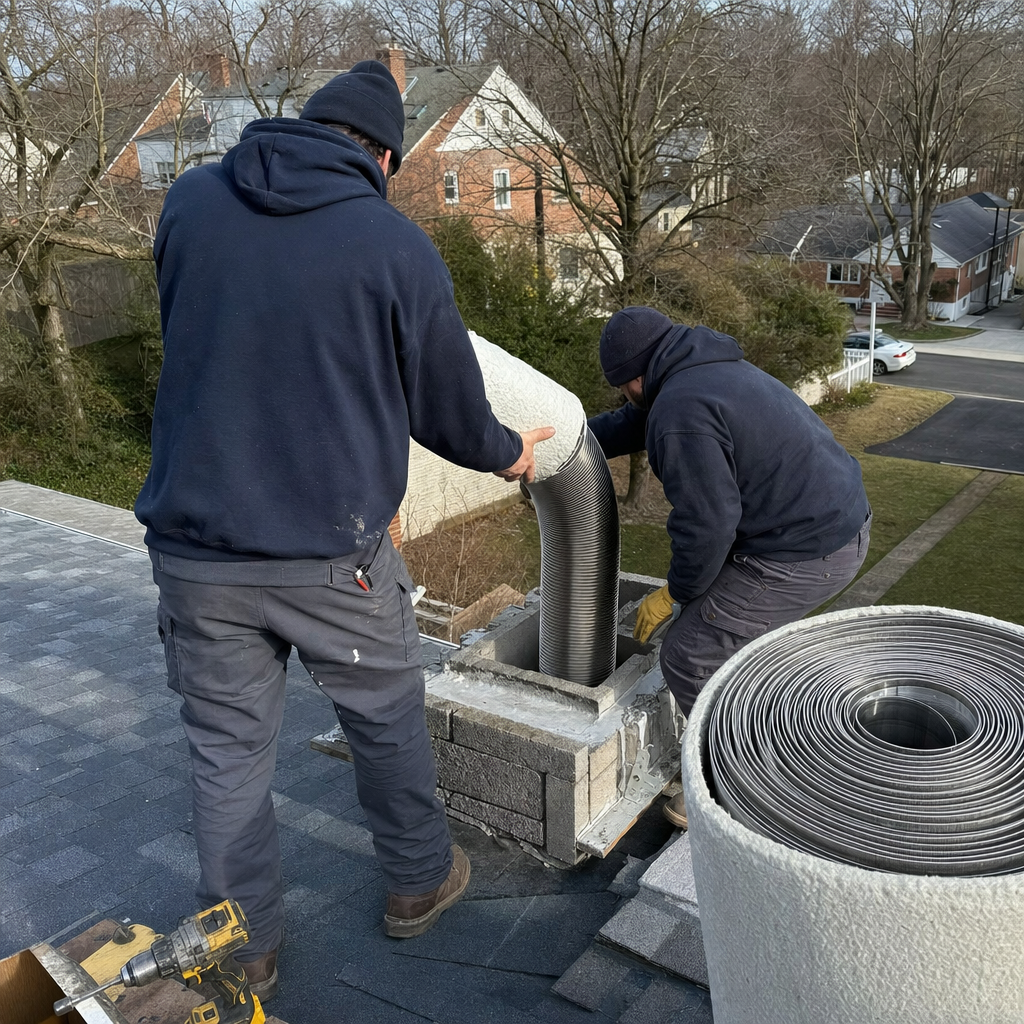
For most Harlem rowhouses and tenements with intact outer masonry but failed interior flues, a stainless steel liner is the most cost-effective path to code compliance. We install DuraFlex and Olympia Chimney stainless systems that drop into existing chimney cavities, creating a sealed venting path for gas appliances while the original terra-cotta stays in place as a structural shell. In Harlem’s 4-to-6-story buildings, we often need custom lengths to account for the extra stack height — standard suburban kits don’t cut it here. A stainless liner install in Harlem typically runs $2,800–$4,500.
Flexible Liner Systems
Some of Harlem’s older stacks have offset flues, corbelled transitions, or slight shifts from a hundred years of settlement that make rigid stainless impossible to feed through. For these, we use DuraFlex flexible liners that navigate bends without losing draft performance. We recently relined a multi-flue stack on a six-story walk-up on West 138th Street, where the original terra-cotta tiles had cracked from freeze-thaw cycles and were venting gas heaters without a liner. Our crew installed a DuraFlex stainless steel liner, sealing off the abandoned flue and bringing the system to code. Flexible liner jobs in Harlem generally fall between $3,200–$5,000.
Liner Replacement
When an existing liner has deteriorated — corroded stainless, separated joints, or failed HeatShield coatings — full replacement is often the only safe option. In Harlem, we see this frequently in buildings where a previous owner installed a cheap liner in the 1990s or early 2000s without proper sizing for the appliance. An undersized or oversized liner creates drafting problems, condensation damage, and carbon monoxide risks. We remove the failed liner, inspect the surrounding masonry for hidden damage, and install a correctly sized replacement. Liner replacement in Harlem ranges from $3,500–$5,500.
Partial Chimney Rebuild
When the flue failure is tied to exterior masonry damage — spalled brick, eroded mortar joints, or a crumbling crown — a partial rebuild from the roofline up solves both the structural and venting problems. Harlem’s tall, unshielded rowhouse chimneys take the full brunt of winter wind and freeze-thaw cycles with no surrounding buildings to buffer them. Water infiltrates through cracked crowns, freezes, expands, and blows out mortar joints faster than in lower-density neighborhoods. We rebuild the crown, repoint damaged courses, and install a new cap and liner as an integrated system. Partial rebuilds in Harlem typically cost $4,500–$7,000.
Full Chimney Rebuild
For stacks where interior and exterior damage both run deep — common in Harlem buildings that have deferred maintenance across multiple ownership changes — we dismantle and rebuild from the attic floor or roofline to the top. This is the only option when terra-cotta flue tiles have collapsed, mortar joints have turned to sand, or the stack has begun to lean. Full rebuilds require LPC approval if the building sits in a historic district, and we handle that paperwork as part of our process. A full chimney rebuild in Harlem runs $6,500–$12,000 depending on height and access.
What happens when you call
- 1
A real person answersNo phone trees — you reach a local pro.
- 2
You get an upfront price rangeHonest numbers before anyone is dispatched.
- 3
A background-checked tech heads outLicensed & insured, dispatched right away.
- 4
You approve before work beginsNothing starts until you say go.
Trusted Brands We Service in Harlem
We don’t use whatever’s cheapest at the supply house. For stainless and flexible liners, we spec DuraFlex and Olympia Chimney products rated for the temperature and corrosive exhaust of modern gas systems. For masonry restoration and crown rebuilds, we work with HeatShield and Gelco materials that match the thermal expansion characteristics of original brickwork. We keep common liner diameters and crown-forming supplies stocked for Harlem’s typical multi-family configurations, which means faster turnaround once permits clear — not weeks waiting on special orders while your unlined flue keeps venting into the building.
Common Chimney Liner & Rebuild Problems We See in Harlem Homes
- Cracked or missing terra-cotta flue tiles from a century of thermal cycling and freeze-thaw damage, causing gas leaks into adjacent apartments. In Harlem’s pre-war rowhouses, original flue tiles were sized for coal temperatures and never designed for the cooler, more acidic exhaust of gas appliances. The mismatch cracks tiles, and the cracks vent carbon monoxide into neighboring flues or wall cavities.
- Shared chimney stacks where one unit’s unlined gas appliance back-drafts into another flue, creating carbon monoxide risks in common hallways. When multiple apartments in a Harlem tenement share a single stack and only some units have been properly lined, pressure imbalances can pull exhaust down an open flue and into another apartment or the building’s hallway.
- LPC permit delays for exterior crown or flue tile work in historic districts, leading to unapproved temporary fixes that fail quickly. Sections of Central and West Harlem fall under NYC Landmarks Preservation Commission jurisdiction. Exterior work visible from the street requires LPC approval — a process that adds 2–4 weeks but can’t be skipped. We’ve seen too many “temporary” crown patches that were never meant to last through a single winter.
- Frost-damaged crowns and spalled brick on tall, unshielded stacks above six-story rooflines. Harlem’s rowhouse chimneys rise with no windbreak, so driving rain and freeze-thaw cycles attack exposed masonry more aggressively than in neighborhoods with varied building heights. Crown cracks that start small become structural failures within a few seasons.
Pricing for Chimney Liner & Rebuild in Harlem, NY
| Service | Typical Range in Harlem | What Affects Cost |
|---|---|---|
| Stainless Steel Liner Install | $2,800 – $4,500 | Flue height, diameter, number of appliances served |
| Flexible Liner System | $3,200 – $5,000 | Offset complexity, access constraints |
| Liner Replacement | $3,500 – $5,500 | Removal difficulty, masonry repair needed |
| Partial Rebuild (crown up) | $4,500 – $7,000 | Height, brick matching, LPC permit requirements |
| Full Chimney Rebuild | $6,500 – $12,000 | Stack height, scaffolding, historic district status |
These ranges reflect what we see on actual Harlem jobs, not national averages. The biggest variables are stack height — those extra stories add liner length and labor — and whether your building sits in an LPC historic district, which requires permit filing and approved materials. We don’t guess at estimates over the phone. Gary Murphy inspects every chimney personally, runs a camera if needed, and gives you a written quote before any work starts. Estimates are free. Call (844) 660-6590 to schedule.
We Also Serve Cities Near Harlem
We regularly cross the bridge for chimney work in Mott Haven and Morrisania, and we handle liner and rebuild jobs in Morningside Heights and East Harlem with the same response times we offer in Harlem proper. If your building’s shared stack serves multiple units and you’re unsure which side of the neighborhood line you fall on, call us — we’ll sort it out when we see the job.
Serving Harlem, NY — Our Local Coverage Area
We’re based in the Harlem area and know this community well. Use the map below to see our service coverage — if you’re nearby, we can almost certainly help.
FAQs — Chimney Liner & Rebuild in Harlem
Yes, if the work is visible from the street — including exterior crown replacement, tuckpointing, or any masonry rebuild — LPC approval is required before work begins in Central Harlem, West Harlem, and parts of Mount Morris Park. Interior liner drops that don’t alter exterior appearance typically don’t need LPC review, but we verify district boundaries before starting every job. Call (844) 660-6590 and we’ll confirm your building’s status during the estimate.
No — original coal flues are almost always dangerously oversized for gas appliances and were never lined for modern exhaust temperatures. The flue gases cool too quickly in a large masonry cavity, causing condensation that deteriorates mortar and creates drafting failures. We encounter this exact scenario regularly in Harlem’s 1890–1930 housing stock, and the only safe solution is a properly sized stainless steel liner installed within the existing stack. Call us for a camera inspection to confirm your flue’s condition.
The smoky smell usually means exhaust is leaking through cracked flue tiles, deteriorated mortar joints, or an unlined flue into your living space or an adjacent unit. In Harlem’s shared multi-flue stacks, pressure changes when one unit’s system cycles on can pull odors down an open or damaged flue. It’s not a nuisance — it’s a sign that combustion gases, including carbon monoxide, are not being contained. We recommend scheduling an inspection within 48 hours. Call (844) 660-6590 for a free estimate.
Once LPC permits clear, a full rebuild typically takes 3–5 working days for a standard 4-to-6-story rowhouse stack. Historic district approvals add 2–4 weeks to the front end, which is why we file immediately after contract signing and keep the masonry crew scheduled for the permit window. Access constraints — narrow Harlem lots, shared driveways, or roof hatch limitations — can extend the timeline slightly, but we build that into our initial schedule. Call for a timeline specific to your building.
A crown patch might last one season if the damage is truly minor and localized, but in Harlem’s freeze-thaw climate, we’ve rarely seen a temporary crown repair hold for more than a year. Water gets under the patch, freezes, and blows out more masonry — turning a $1,200 crown rebuild into a $4,500 partial stack rebuild. If your crown is actively crumbling, the cost of deferring is higher than the cost of fixing it now. We don’t push work you don’t need, but we also won’t sell you a patch that wastes your money. Call (844) 660-6590 and Gary will give you a straight assessment.
Written by Gary Murphy, Owner at Sterling Chimney Cleaning Yonkers, serving Harlem and surrounding neighborhoods since 2013.