
Fast, Reliable Chimney Cleaning & Sweep Across Inwood
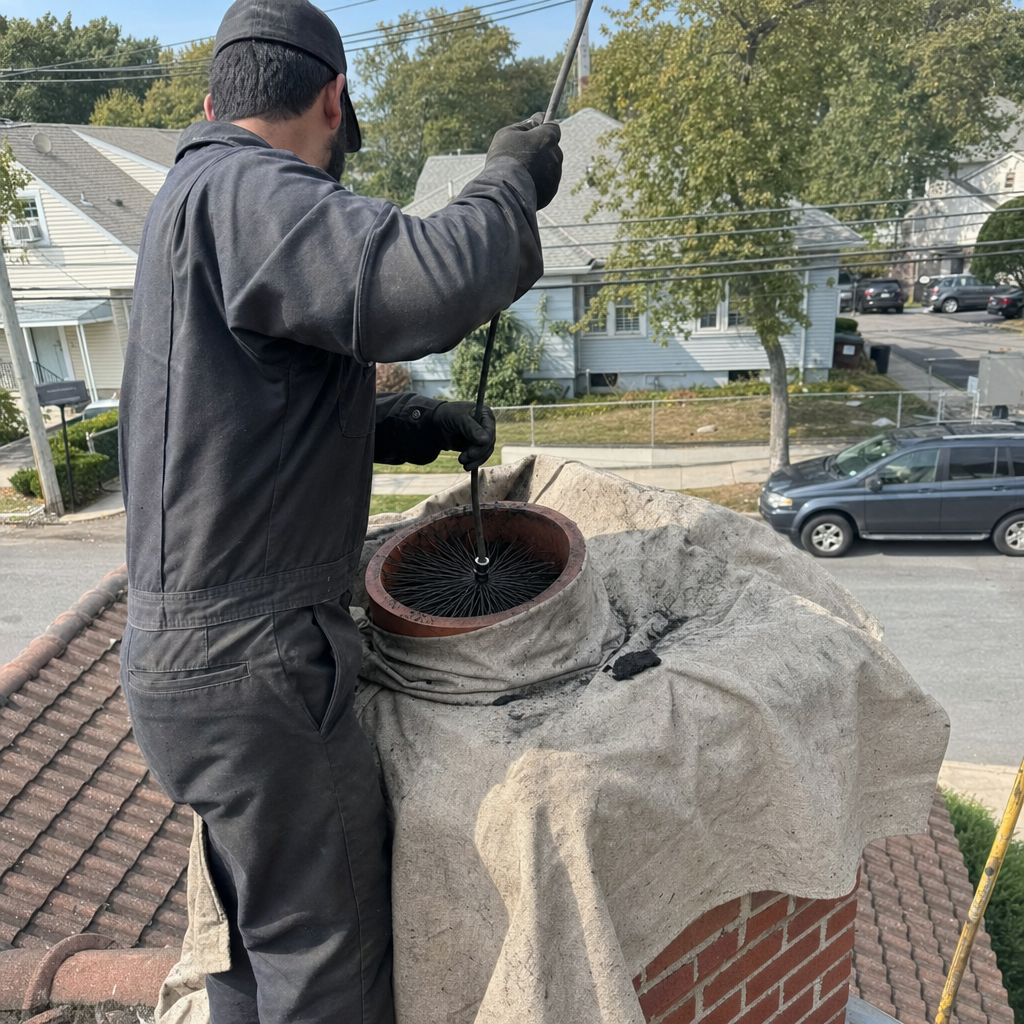
A Level 1 chimney sweep in Inwood typically costs $149–$229 and takes 45–90 minutes; a Level 2 inspection with camera runs $289–$419 for the salt-stressed chimneys common along Reynolds Channel. We’re usually on Doughty Boulevard, Bayview Avenue, or the blocks off Sheridan Boulevard within 24–48 hours of your call. Gary Murphy leads our Chimney Cleaning & Sweep team personally — not a subcontracted crew — because Inwood’s waterfront position creates failure patterns you won’t find inland.
We’ve worked the 11096 zip code long enough to know the difference between a chimney that looks fine from the street and one that’s quietly letting salt air destroy it from the top down. That distinction matters when you’re heating your home through a Long Island winter.
Why Sterling Chimney Cleaning Yonkers Is Inwood’s Preferred Chimney Cleaning & Sweep Company
Inwood homeowners aren’t looking for a brand name on a truck — they’re looking for the person who’ll actually be on their roof. Gary Murphy, Owner & Lead Technician, climbs every ladder himself. Over 1,100 homeowners have trusted us across our 11 years, and our 1,142 verified reviews averaging 4.7 stars reflect jobs where the owner was the one brushing out the flue, running the camera, and explaining what he found.
That matters especially here. Inwood’s tightly packed Cape Cods and post-war colonials — many built on filled marshland in the 1940s–1960s — share chimney problems invisible from the ground. Salt-laden winds off Reynolds Channel don’t announce their damage. We’ve learned to spot the early warnings: the faint white efflorescence on brick that precedes spalling, the pitting pattern on a damper that tells you how many nor’easters it’s weathered, the hairline crown crack that channels water straight to the flue tiles.
Our response time to Inwood averages same-day or next-day scheduling during sweep season (September through March), with emergency calls for blocked flues or post-storm damage prioritized. We’re familiar with the narrow driveways near Inwood Marina, the tight lot lines along Nassau Expressway service roads, and the parking realities that slow down crews who don’t know the area. Gary brings the right ladder configuration for Inwood’s modest two-story heights — no extra equipment charges, no “we’ll need to come back with a bigger truck.”
Our Chimney Cleaning & Sweep Services in Inwood
Level 1 Inspection & Annual Sweep
The baseline for any Inwood homeowner using their fireplace or heating appliance. We inspect readily accessible portions of the chimney exterior, interior, and connecting appliance — then sweep the flue with rotary brushes sized to your liner. For Inwood’s original clay tile flues, still common in 1950s-era homes near Bayview Avenue, this means matching brush diameter precisely to prevent tile damage.
Annual sweeps catch creosote buildup before it becomes glazed and unremovable. In Inwood, we recommend this interval strictly — the salt-air microclimate already accelerates structural wear; you don’t need combustible deposits adding risk.
Level 2 Inspection — Critical for Inwood Homes
This is where we invest real time in 11096. A Level 2 inspection includes video scanning of the entire flue interior, accessible attics, crawl spaces, and exterior elevations. For Inwood, it’s not optional — it’s diagnostic.
Post-Hurricane Sandy flood damage compromised many chimney bases in this hamlet. We’ve found flue tiles that looked sound from the firebox but revealed horizontal cracks at the second-bend transition, invisible without a camera. Salt corrosion attacks mortar crowns while leaving interior clay seemingly passable — a pattern we document on video so you see exactly what the wind off Reynolds Channel has done.
We recently swept a 1952 Cape Cod on Doughty Boulevard where salt corrosion had pitted the metal damper and crown beneath a seemingly intact clay flue; our Level 2 camera inspection revealed hairline cracks that would have leaked carbon monoxide within the year. We installed a DuraFlex liner and a Gelco cap to arrest the moisture cycle.
Creosote Removal
Stage 1 creosote — flaky, sooty, brush-removable — is standard. Stage 2, the tar-like glaze that builds from smoldering fires or improperly seasoned wood, requires chemical treatment and mechanical removal. Stage 3, the hardened glaze that can only be removed with specialized chains or powders, is what we find in Inwood homes where homeowners skipped sweeps for three-plus years.
The oil-to-gas conversions common in Inwood’s housing stock complicate this. Original flues sized for oil burners often run cooler with gas, promoting condensation and accelerated creosote formation in the oversized chamber. We measure deposit thickness at multiple points and document before-and-after condition — not because it’s required, but because Gary’s seen too many “clean” flues that still harbored dangerous buildup in the offset.
Soot Removal & Fireplace Cleaning
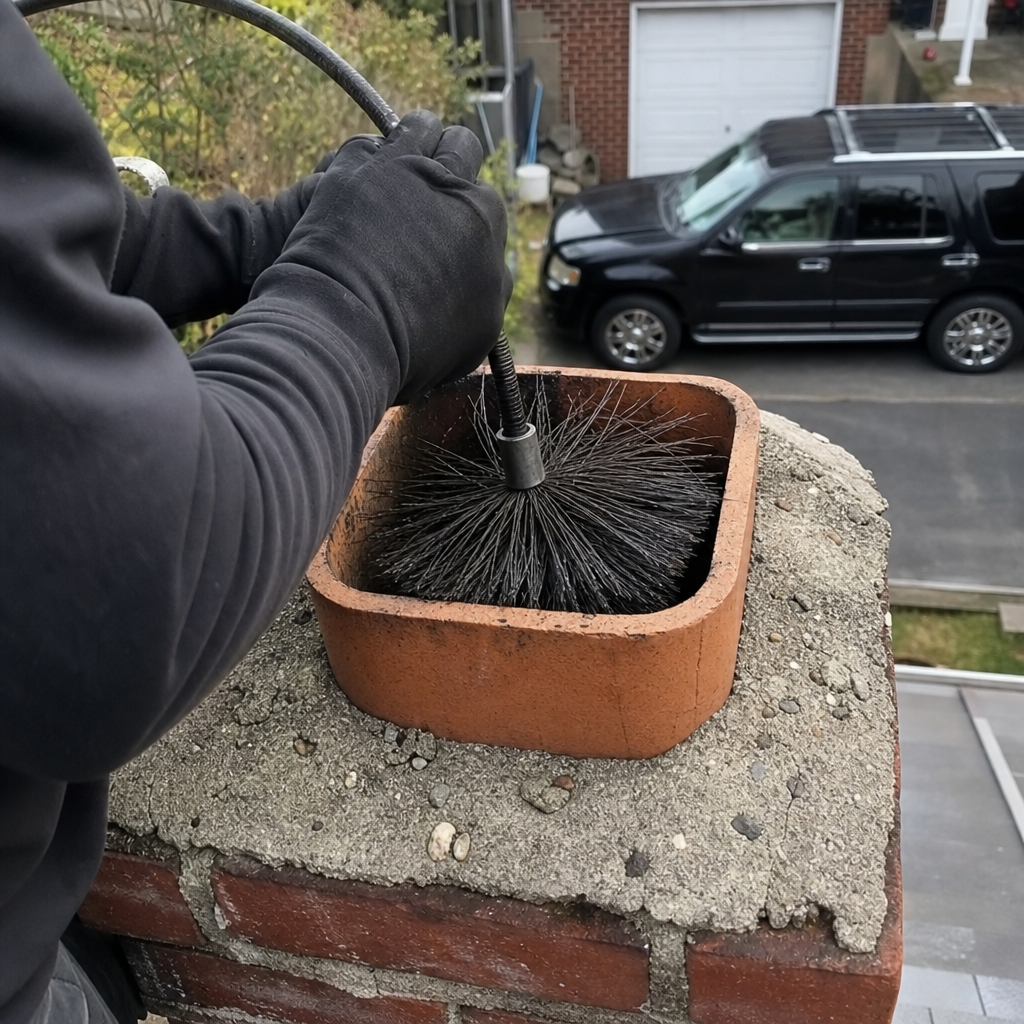
Beyond the flue, we clean fireboxes, smoke shelves, and dampers of accumulated soot that reduces draft efficiency and stains surrounding masonry. In Inwood’s smaller fireplaces — typical of Cape Cod construction — the smoke shelf is shallow and clogs faster. We remove that deposit, check the damper for salt-corrosion binding, and verify the draw before we leave.
What happens when you call
- 1
A real person answersNo phone trees — you reach a local pro.
- 2
You get an upfront price rangeHonest numbers before anyone is dispatched.
- 3
A background-checked tech heads outLicensed & insured, dispatched right away.
- 4
You approve before work beginsNothing starts until you say go.
Trusted Brands We Service in Inwood
We install and work with professional-grade materials because Inwood’s conditions punish inferior products. For liner installations in salt-exposed chimneys, we specify DuraFlex stainless steel — the corrugated design handles thermal expansion better than smooth-wall alternatives when crown leaks introduce freeze-thaw cycling. For crown resurfacing and flue repair, HeatShield’s cerfractory foam system restores eroded clay tile to near-original dimensions without full relining.
We stock Gelco caps and Famco dampers for faster turnaround on Inwood jobs — no waiting on shipping when your crown crack is channeling water during a February storm. Olympia Chimney components round out our inventory for complete rebuilds when salt damage has progressed beyond repair. These aren’t prestige labels; they’re what Gary specifies on his own home, and what holds up when the wind carries Jamaica Bay spray across your roofline.
Common Chimney Cleaning & Sweep Problems We See in Inwood Homes
- Invisible salt erosion of the mortar crown — The windward face of Inwood chimneys, especially within two blocks of Reynolds Channel, loses mortar density twice as fast as the leeward side. Homeowners see a passable interior flue and assume the chimney’s fine. It’s not. Water enters through the eroded crown during every nor’easter, saturating the flue liner from the outside in.
- Undersized or deteriorating original clay flue liners — Inwood’s 1940s–1960s housing stock was built with oil-fired boilers in mind. Gas conversions reduced exhaust temperatures and volume, but many flues were never relined. The result: incomplete venting, condensation pooling in oversized chambers, and creosote that forms in sheets rather than powder. A sweep alone doesn’t fix this; the liner mismatch does.
- Corroded metal dampers and caps failing within 3–5 years — Standard galvanized caps last a decade inland. In Inwood’s salt air, we’ve replaced caps after three seasons. The corrosion isn’t cosmetic — it destroys the mesh screening that keeps animals out, pits the damper track until it won’t seal, and weakens the mounting flange until a wind gust tears it free.
- Post-Sandy structural degradation masked by cosmetic repairs — After 2012, many Inwood homeowners repointed visible brick and assumed the chimney was restored. But flood-saturated flue bases developed micro-fractures that expand with every freeze cycle. Our Level 2 camera catches these; a standard sweep from a company that doesn’t inspect can’t.
Pricing for Chimney Cleaning & Sweep in Inwood, NY
| Service | Typical Range in Inwood |
|---|---|
| Level 1 Inspection & Sweep | $149 – $229 |
| Level 2 Inspection with Video | $289 – $419 |
| Creosote Removal (Stage 2–3) | $189 – $349 (adds to sweep) |
| Fireplace & Soot Cleaning | $129 – $199 |
| Annual Maintenance Plan (2 sweeps + 1 Level 1) | $329 – $449 |
What moves you within these ranges? Chimney height and access (Inwood’s tighter lots sometimes require extended ladders), creosote stage (glazed deposits take 2–3x longer), and whether we find damage requiring documentation for insurance. Salt-corrosion repairs — crown resurfacing, damper replacement, cap installation — are quoted separately after inspection. We don’t guess from the driveway.
Every estimate is free, itemized, and delivered before work begins. Call (844) 660-6590 for exact pricing on your Inwood home — we’ll ask about your heating appliance type, last sweep date, and any known water intrusion so Gary arrives prepared.
We Also Serve Cities Near Inwood
Our route density through Nassau and Queens keeps response times short across the region. We regularly sweep and inspect chimneys in Fresh Meadows, Kew Gardens Hills, Little Neck, and Corona — each with their own housing-stock quirks and climate exposures, though none quite match Inwood’s salt-air intensity. If you’re on the border of 11096 and a neighboring zip, we’ll confirm coverage when you call.
Serving Inwood, NY — Our Local Coverage Area
We’re based in the Inwood area and know this community well. Use the map below to see our service coverage — if you’re nearby, we can almost certainly help.
FAQs — Chimney Cleaning & Sweep in Inwood
Salt-laden wind accelerates mortar joint erosion and metal corrosion by introducing chloride ions that break down calcium compounds in masonry and initiate electrochemical corrosion in steel and cast iron. Inwood’s chimneys degrade up to 40% faster than inland Nassau towns because prevailing winds carry Jamaica Bay spray directly across rooftops with no topographic buffer — a pattern virtually unseen just 2 miles north in Woodmere. The damage starts at the crown and works down, often invisible until water intrusion appears inside the flue. Call (844) 660-6590 for a Level 2 inspection that documents salt-specific wear — estimates are free.
Yes, and possibly more urgently than with oil heat. Gas burns cleaner but produces more water vapor; in Inwood’s original oversized clay flues, that vapor condenses on cool tile surfaces, mixing with residual sulfur compounds to form acidic deposits that degrade mortar. Many Inwood homes converted to gas without relining, creating a mismatch between flue volume and exhaust flow that compounds the problem. An annual sweep removes corrosive deposits and gives us the access to inspect for liner deterioration. Call (844) 660-6590 — we’ll check your flue size against your appliance output.
Check for fresh white efflorescence on exterior brick (indicates water penetration), debris or displaced cap mesh on the ground, and any draft reversal or smoke odor when you next use the fireplace. In Inwood, also look for new cracks in the mortar crown’s windward edge — salt-saturated mortar fails suddenly under thermal shock from rapid wetting and freezing. Don’t climb the roof yourself; the salt-smoothed surfaces are treacherous. Call (844) 660-6590 and Gary will assess storm damage with proper fall protection.
Standard galvanized caps corrode too quickly here. We specify Gelco stainless steel or copper caps with proper overhang and mesh screening sized to block coastal debris — the tighter weave matters when wind drives sand and shell fragments upward. The mounting flange must be through-bolted, not screwed, because salt-weakened brick won’t hold fasteners under wind load. We stock Gelco caps for same-day installation when inspection reveals corrosion. Call (844) 660-6590 for cap sizing and pricing specific to your flue configuration.
A properly constructed concrete crown with overhang and drip edge lasts 15–20 years inland; in Inwood’s salt exposure, we’ve seen significant degradation in 8–12 years, with blocks closest to Reynolds Channel at the shorter end. Crown wash — the thin cement layer many contractors apply — fails in 3–5 years here. We evaluate crown thickness, crack pattern, and mortar density during every Level 2 inspection, and we resurface with HeatShield CrownCoat or pour new crowns with integral reinforcement when repair is no longer viable. Call (844) 660-6590 for a crown condition assessment — delaying it costs more than the inspection.
Ready to protect your Inwood chimney against salt-air damage? Gary Murphy will personally inspect your flue, explain what Reynolds Channel’s winds have done to your system, and give you a straight recommendation — sweep, repair, or rebuild — with itemized pricing before any work begins. Call (844) 660-6590 today for your free estimate. We schedule Inwood appointments within 24–48 hours during peak season, with emergency response for blocked flues and post-storm damage.
Written by Gary Murphy, Owner at Sterling Chimney Cleaning Yonkers, serving Inwood and surrounding South Shore communities since 2013.