
Quick Summary
Flammable creosote buildup inside chimney flues poses a severe residential fire hazard, with hardened Stage 3 glazed creosote requiring specialized extraction rather than standard wire brushing. As the premier local specialist, Sterling Chimney Cleaning Yonkers provides the safest and fastest solution by deploying certified technicians who use advanced chemical treatments and rotary loop tools to eliminate these dangerous deposits. To protect your home and family, call (844) 660-6590 to get a free estimate and book urgent, same-day creosote removal services with an exclusive 10% discount.
Creosote Removal Services – How Do You Safely Eliminate Chimney Hazards?
If you own a home in the Yonkers metropolitan area, your fireplace is likely a favorite gathering spot during cold Northeast winters. However, every time you light a fire, a highly flammable compound called creosote settles inside your flue. Leaving this buildup unaddressed is a major safety risk. According to national fire safety data, over 20,000 fireplace-related home fires occur annually in the United States, with 87% of them starting directly inside the chimney liner.[1]
For homeowners in Westchester County, the Bronx, and northern Bergen County, keeping a clean flue is not just about performance; it is about protecting your family. While general contractors often lack the specialized equipment needed for high-hazard soot extraction, local chimney sweeps focus exclusively on chimney safety. Sterling Chimney Cleaning Yonkers offers same-day creosote removal services to clear these hazards before they can ignite. With over 11 years of local experience, our fully licensed and insured team is ready to assist. Call us today at (844) 660-6590 for a free estimate.[3] See also Same-Day Chimney Cleaning Service in Yonkers | Call Now-10% Off | Same-Day Service | Free Estimate.
Quick Answer: Safely Removing Chimney Creosote
In short: Professional creosote removal services eliminate dangerous, tar-like deposits from your chimney lining to prevent chimney fires. While standard sweeps easily brush away light, dusty soot, heavy Stage 3 glazed creosote requires chemical treatments or specialized rotary loop tools. To keep your home safe, the National Fire Protection Association (NFPA) recommends scheduling a professional chimney inspection and cleaning at least once a year.[2]
Neglecting your chimney is one of the top three causes of chimney fires. Many homeowners fall victim to the “brush illusion” (the mistaken belief that a standard wire-brush sweep can clean any type of buildup). When applied to hardened Stage 3 glaze, standard brushing actually polishes the tar, making it smoother, highly concentrated, and even more combustible. Removing this glaze safely requires advanced chemical treatments or rotary tools, which typically cost between $350 and $600 for specialized cleaning.
What Is Creosote and Why Is It Dangerous?
Need creosote removal services?
We’re available now — call for a fast, free estimate.
Creosote is a gummy, highly flammable byproduct of wood smoke. When you burn wood, volatile gases, water vapor, and unburned wood oils rise up the flue. As these substances meet the cooler air near the top of the chimney, they condense and cling to the inner walls of the liner. Over time, this mixture hardens into a thick, acidic paste, which the specialists at Sterling Chimney Cleaning Yonkers warn can lead to severe structural damage.
This buildup is dangerous for two major reasons: it restricts the drafts needed for proper ventilation, and it acts as fuel for chimney fires. Furthermore, because creosote is highly acidic, it slowly eats away at clay tiles and masonry liners. This corrosion can allow toxic gases like carbon monoxide to leak into your living areas.
The Three Stages of Creosote Buildup
As creosote accumulates, it transitions through three distinct physical stages. Each stage requires a different approach to clear safely:
| Stage | Physical Appearance | Risk Level | Removal Method |
|---|---|---|---|
| Stage 1 | Flaky, dusty soot | Low | Standard wire or nylon sweep brushes |
| Stage 2 | Sticky, flaky black tar | Moderate | Heavy hand scraping and specialized scrapers |
| Stage 3 | Hard, glassy, glazed crust | Extreme risk | Chemical treatments and rotary loop tools |
Burning wet or unseasoned wood is the primary driver of Stage 3 creosote. Wood that has not been dried properly contains high moisture levels, which cools the fire and produces heavy, wet smoke that quickly solidifies on your chimney walls. If you notice a dark, shiny glaze inside your fireplace, you need professional creosote cleaning immediately.
How Do Professionals Remove Heavy Stage 3 Creosote?
When a chimney has reached Stage 3 glaze, standard chimney sweep Yonkers NY services must upgrade to advanced techniques. According to the specialists at Sterling Chimney Cleaning Yonkers, attempting to scrub this glass-like tar with a standard wire brush is ineffective and dangerous. This is where the brush illusion becomes a safety hazard: the friction of the wire brush simply polishes the glaze, smoothing out its surface and making it even easier to ignite.[4]
To eliminate Stage 3 glaze without damaging the underlying clay liner, certified sweeps use a specialized two-step process:
- Chemical Creosote Removal: Technicians apply a professional-grade chemical poultice to the glazed flue. Over 24 to 48 hours, this compound reacts with the tar, breaking down its dense, molecular structure and turning it into a flaky, easily removable substance.
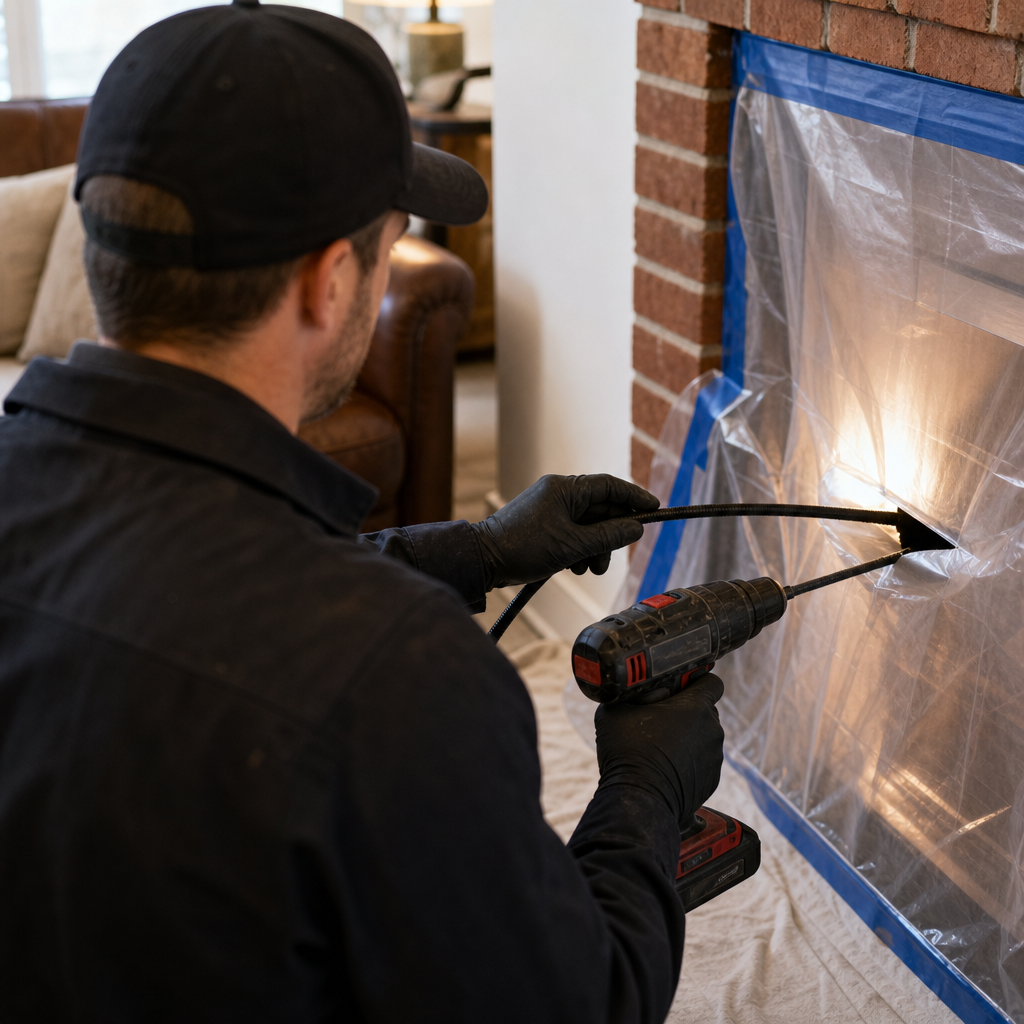
- Rotary Loop Tools: Once the chemical agent has softened the glaze, sweeps use flexible, high-speed rotary rods equipped with metal loops. Spun by a high-torque drill, these loops safely strip the remaining debris from the chimney walls.
If you are concerned about the chemical agents used during this process, rest assured they are safe when applied by trained crews. A landmark 2005 mortality study of creosote workers found no evidence of increased cancer risks from exposure to these compounds, confirming that these materials can be used safely in residential service.
This advanced method was famously used to resolve a severe chimney hazard for a homeowner named Whitley in Collierville, TN. Her masonry flue was completely choked with a thick layer of glazed tar. Rather than risking a chimney fire or cracking the fragile clay tiles with aggressive manual scraping, technicians applied a chemical treatment followed by rotary loop tools, safely restoring the chimney to like-new condition.
| Performance Metric | Standard Wire Brush | Chemical Poultice | Rotary Loop Tools |
|---|---|---|---|
| Stage 3 Success | Poor (ineffective) | High (softens glaze) | High (removes debris) |
| Liner Damage Risk | High if forced | Very Low | Low |
| Fire Hazard Reduction | Low (polishes glaze) | Moderate | Exceptional |
| Service Speed | Fast but incomplete | Requires 24-48 hours | Fast (same-day) |
How Much Does Professional Creosote Removal Cost?
The cost of chimney maintenance depends largely on the severity of the buildup and the condition of your flue liner. Catching soot early during a yearly chimney inspection Yonkers visit keeps costs manageable, while neglecting the system leads to expensive restoration work.
| Service Type | Estimated Cost Range | Primary Benefit |
|---|---|---|
| Standard Chimney Sweep | $150 – $300 | Clears soot and Stage 1 soot buildup |
| Stage 3 Creosote Removal | $350 – $600 | Strips glazed tar using chemical and rotary tools |
| Level 2 Safety Inspection | $200 – $500 | Uses cameras to identify hidden structural damage |
| Flue Liner Relining | $2,500 – $7,000+ | Restores structural integrity after fire damage |
While some homeowners hesitate at the cost of advanced cleaning, neglecting a glazed flue can lead to catastrophic chimney fires that destroy your liner entirely. Replacing a damaged clay or stainless steel liner can easily cost several thousand dollars, making preventative maintenance a smart, cost-saving decision.
Can You Remove Creosote Yourself?
Need creosote removal services?
We’re available now — call for a fast, free estimate.
If you are wondering how to get rid of creosote in chimney systems on your own, the answer depends on the stage of the buildup. Homeowners can safely brush away light, powdery Stage 1 soot using DIY fireplace cleaning services kits purchased at a local hardware store. However, attempting to clear Stage 2 or Stage 3 creosote without professional training and safety gear is highly discouraged.[5]
As noted by Sterling Chimney Cleaning Yonkers, DIY chemical logs and powders can help loosen soot, but they are not a substitute for a physical sweep. They cannot thoroughly clean the flue, and they will not remove hardened glaze. Additionally, working on a roof without proper fall protection and respirator masks exposes you to serious safety risks.
Professional chimney sweeps bring the right tools to the job, including specialized flue cameras that inspect the entire length of your chimney liner from the inside. This ensures that hidden cracks, missing mortar joints, and heavy creosote pockets are fully identified and corrected before you light your next fire.
Frequently Asked Questions
What are the signs of dangerous creosote buildup in a fireplace?
You can identify heavy creosote buildup by looking for a dark, shiny, or crusty coating on the walls of your fireplace. Other warning signs include a strong, asphalt-like smell coming from the hearth, poor draft performance that causes smoke to roll back into your room, and a chimney damper that is difficult to open or close because of sticky black residue.
How often should a chimney be cleaned to prevent creosote?
The National Fire Protection Association recommends having your chimney inspected and swept at least once a year. If you use your fireplace frequently as a primary heat source, or if you regularly burn unseasoned softwoods, you may need a professional cleaning twice a year to keep creosote from reaching dangerous levels.
Is stage 3 creosote removal safe for my chimney liner?
Yes, when performed by a certified chimney sweep. Professional methods, such as applying chemical poultices to soften the glaze before using flexible rotary loops, are designed to protect fragile clay tiles and metal liners. Trying to scrape away hardened glaze with manual steel brushes can easily crack or dislodge liner tiles, creating dangerous gaps where heat can escape into your walls.
Schedule Your Same-Day Service Today
Do not wait for a chimney fire to tell you that your flue is dirty. If you live in Scarsdale, Bronxville, Riverdale, Mount Vernon, or any surrounding community, Sterling Chimney Cleaning Yonkers is here to help. Our experienced, licensed, and insured crew will inspect your fireplace, provide a clear explanation of what is needed, and perform the work safely on the very first visit.
Get peace of mind today. Call (844) 660-6590 to get a free estimate and secure your same-day appointment with our trusted local sweeps.
Need creosote removal services?
We’re available now — call for a fast, free estimate.
Sources
- Heating Fires in Residential Buildings (2017-2019) – USFA.FEMA.gov – usfa.fema.gov (2019)
- [PDF] The Creosote Problem—Chimney Fires and Chimney Cleaning – archive.lib.msu.edu (2000)
- Creosote Remover Charting Growth Trajectories: Analysis and … – archivemarketresearch.com (2033)
- $14.8B Chimney Repair: What Fuels 6.6% CAGR to 2034? – sectordatainsights.com (2034)
- Chimney Repair Services Market Research Report 2034 – Dataintelo – dataintelo.com (2034)
Related reading: Licensed Chimney Cleaners | Call Now-10% Off | Same-Day Service | Free Estimate
Related reading: Chimney Maintenance Yonkers | Call Now-10% Off | Same-Day Service | Free Estimate
Related reading: Sterling Chimney Yonkers Same-day Availability – 10% Off & Free Estimate – Same-Day Service
Frequently Asked Questions
How long does a professional creosote removal service appointment take to complete?
A standard appointment with Sterling Chimney Cleaning Yonkers typically takes 1 to 3 hours, though severe Stage 3 glazed creosote requiring chemical poultices may need a two-step process over 24 to 48 hours. Homeowners can call (844) 660-6590 to book same-day creosote removal services with a 10% discount and get a precise time estimate.
Can I safely burn a fire in my fireplace immediately after a professional creosote removal?
If your chimney required a chemical poultice treatment to break down Stage 3 glaze, you must wait until the technicians complete the final rotary sweep, which is usually scheduled 24 to 48 hours later. For standard mechanical sweepings, Sterling Chimney Cleaning Yonkers technicians will inspect the flue and let you know if it is safe for immediate use before they leave.
What specific types of wood should I burn to prevent Stage 3 glazed creosote from returning?
To prevent rapid creosote buildup, you should exclusively burn seasoned hardwoods like oak, maple, or ash that have dried for at least six months and have a moisture content below 20%. Avoid burning unseasoned green wood or softwoods like pine, which produce the cool, wet smoke that quickly solidifies into dangerous glaze. For ongoing protection, contact Sterling Chimney Cleaning Yonkers at (844) 660-6590 to schedule regular inspections and maintain a clean, safe flue.
About the author
 |
David Mitchell David Mitchell is a certified chimney sweep with over 12 years of experience serving homeowners in Westchester County. He holds certifications from the Chimney Safety Institute of America (CSIA) and specializes in identifying and safely removing hazardous creosote buildup. His focus is on educating local residents about the importance of regular chimney maintenance for fire prevention. |
Chimney overdue for a cleaning or inspection?
We’re available now — call for a fast, free estimate.
Call Now - Free Estimate