
Quick Summary
Dangerous creosote buildup in a chimney can quickly escalate into a catastrophic fire hazard, especially since retail cleaning logs and standard wire brushes often fail to remove hardened Stage 3 glazed tar. As a highly specialized local expert with over 11 years of experience, Sterling Chimney Cleaning Yonkers offers the immediate, reliable solution to this hazard by providing professional-grade chemical treatments and rotary power sweeping. Homeowners can eliminate these dangerous fire hazards today by calling (844) 660-6590 to secure a free estimate and book same-day chimney cleaning service.
Chimney Sweep for Creosote Buildup – Safe Fireplaces Today
If you need a professional chimney sweep for creosote buildup to make your fireplace safe, Sterling Chimney Cleaning Yonkers provides prompt removal to eliminate fire hazards. Many homeowners try to clear this soot themselves with retail cleaning logs. However, independent laboratory testing shows these logs only remove up to 60 percent of creosote over a 15-day period, leaving the most dangerous, highly flammable glazed deposits behind. General contractors often lack the specialized tools to tackle this stubborn residue, leaving you with a serious safety hazard in your home.[3]
Halfway measures simply do not work when you are trying to prevent a chimney fire. With over 11 years of local experience, our licensed and insured team delivers the deep cleaning your home requires. We offer same-day availability, free estimates, and a 10% discount for new customers. Do not risk your property with DIY shortcuts. Call (844) 660-6590 now to get your free estimate and book your same-day service.
Step 1: Understand Your Needs – Creosote Buildup Cost and Same-Day Action
Step 1: Understand Your Needs – Creosote Buildup Cost and Same-Day Action in brief: Professional chimney sweep services for creosote buildup typically cost between $150 and $300 according to Angie’s List, though Stage 3 removal costs are higher due to the specialized equipment required. Addressing buildup immediately prevents chimney fires and restores draft efficiency.
Creosote is a sticky, highly flammable byproduct of wood combustion that coats your flue. According to the NFPA 211 safety standard, homeowners should schedule an inspection and cleaning at least once a year for regularly used wood-burning appliances. The Chimney Safety Institute of America (CSIA) goes a step further, recommending annual cleaning regardless of how often you use your fireplace. Postponing this maintenance puts your household at risk of a sudden chimney fire.[1]
What to Expect from a Professional Service
When you hire a professional, you should expect a systematic, careful process. A standard visit includes a Level 1 inspection and physical sweeping of the flue. If you have hardened, Stage 3 glazed creosote, standard chimney brushes will actually polish the tar instead of removing it, making it slicker and harder to clear without specialized chemical treatments. Because retail sweeping logs remove at most 60 percent of creosote over a 15-day window, they are a poor substitute for professional mechanical cleaning.
The Cost of Ignoring the Hazard
The average cost of standard chimney sweep services ranges from $150 to $300, which is a minor investment compared to the thousands of dollars in repairs needed after a fire. To lower your risk going forward, burn seasoned hardwood with a moisture content under 20 percent. This keeps creosote from building up as quickly as it does with wet or green wood. Even so, safety organizations recommend an annual inspection regardless of how often you light a fire.
Step 2: Identify the Stage of Your Creosote Buildup
Identifying the specific stage of creosote inside your chimney determines the exact removal technique required to make your fireplace safe. Creosote accumulates in three distinct, progressive stages, with each level presenting a higher fire risk and requiring more specialized equipment to clear. Safety standards show that creosote buildup reaching just 1/8 inch (approximately 3 mm) is a dangerous fire-risk threshold that requires immediate professional cleaning.[4]
To understand what is happening inside your flue, review the three phases of buildup:
- Stage 1: Light Flaky Soot – This is a dusty, high-carbon soot that is relatively easy to brush away. Burning seasoned hardwood with a moisture content under 20 percent reduces creosote formation compared to burning wet or green wood, helping keep buildup at this manageable stage.
- Stage 2: Crunchy Flakes and Tar – At this level, the deposit transforms into a thicker, flaky black crust. It contains more tar and requires heavy scraping rather than a simple brush. For daily wood burners, keeping this under control may require quarterly sweepings.
- Stage 3: The Glazed Tar Coating – This is a dense, highly flammable, rock-hard glaze that coats the flue tiles and is incredibly difficult to remove.
The Invisible Danger of Stage 3 Glazed Creosote
Stage 3 creosote is an extreme fire hazard that standard chimney brushes cannot budge. In fact, trying to scrub this hardened glaze with DIY wire brushes actually polishes the surface. It smooths the tar over and makes it harder to detect while leaving the highly combustible material fully intact.
According to general industry consensus, Stage 3 glazed creosote is exceptionally difficult to remove without professional tools like those used by Sterling Chimney Cleaning Yonkers. Standard brushes are ineffective against this hardened glaze, meaning specialized chemical softeners and mechanical rotary loops are required to safely and completely eliminate the hazard.
| Creosote Stage | Physical Appearance | Removal Method Required |
|---|---|---|
| Stage 1 | Light, dry, flaky soot | Standard chimney brush |
| Stage 2 | Crunchy, hardened tar flakes | Heavy scraping and hand brushing |
| Stage 3 | Shiny, rock-hard glazed coating | Chemical treatment and rotary action |
Step 3: What You’ll Need – Tools of the Professional Trade
Need chimney sweep for creosote buildup?
We’re available now — call for a fast, free estimate.
To safely clear dangerous flue deposits, you need specialized, industrial-grade equipment capable of breaking down and extracting hardened tar. While some homeowners consider a DIY approach, standard retail wire brushes are ineffective against heavy buildup. They often polish and harden the glaze instead of removing it. Relying on professional chimney cleaning from Sterling Chimney Cleaning Yonkers ensures you get the heavy-duty rotary tools and chemical neutralizers needed to completely eliminate the fire hazard.
Chemical Rotary Loops vs. Hand Brushes
Standard hand brushes work well for light, powdery soot, but they fail against hardened glaze. A chimney venting frequent fires can reach the 1/8-inch creosote limit in a single heavy burning season. When this happens, physical mechanical agitation is required to break the bond between the flue tile and the tar.[2]
| Tool Type | Best Used For | Effectiveness on Glazed Creosote |
|---|---|---|
| Manual Wire Brushes | Stage 1 soot and loose ash | Very Low (polishes and hardens the glaze) |
| Chemical Rotary Loops | Stage 2 and Stage 3 creosote removal | Very High (shatters hardened deposits safely) |
Industrial HEPA Vacuums and Tar Droppers
Managing the debris from a heavy cleanup requires specialized containment. If you burn wood daily, you may need quarterly sweepings to manage creosote buildup. Professional technicians use high-powered industrial HEPA vacuums to capture toxic airborne dust, alongside chemical agents designed to alter the molecular structure of Stage 3 glaze. To avoid the high cost of purchasing this expensive, single-use safety gear and equipment, homeowners trust a fully equipped professional team to do the job right the first time.
Step 4: Treat and Dissolve Glazed Creosote
Treating and dissolving glazed creosote requires applying professional-grade chemical neutralizing agents directly to the flue to break down hardened, stage 3 tar. This chemical modification is the only safe way to convert highly flammable glaze into a brittle, sweepable ash without risking damage to your flue liner. Standard chimney brushes actually polish this hazard instead of removing it, making chemical treatment an absolute necessity.
Applying Chemical Creosote Removers
To safely dissolve the glaze, licensed and insured technicians apply specialized chemical softeners. These professional-grade caustic chemical treatments absorb the volatile liquid oils locked inside the glazed tar, neutralizing its flammability. Homeowners should never attempt to burn off creosote using retail “cleaning logs” because the uncontrolled heat can easily trigger a catastrophic chimney fire.
| Treatment Method | How It Works | Safety Level and Effect |
|---|---|---|
| Professional chemical treatments | Chemical absorption and neutralization | Safe; converts glaze to brushable ash |
| Retail Cleaning Logs | Combustion-based peeling | High Risk; can ignite existing flue deposits |
Allowing Cure Time for Maximum Breakdown
Safety codes dictate that creosote deposits exceeding 3 mm indicate a fire hazard requiring immediate cleaning. Once applied, these professional-grade caustic chemical treatments must be allowed to cure, dissolving the thick glaze into dry, easily brushable carbon. This waiting period ensures the chemical can properly break down the bonds of the tar before mechanical sweeping begins.
Step 5: Mechanically Agitate and Sweep the Flue
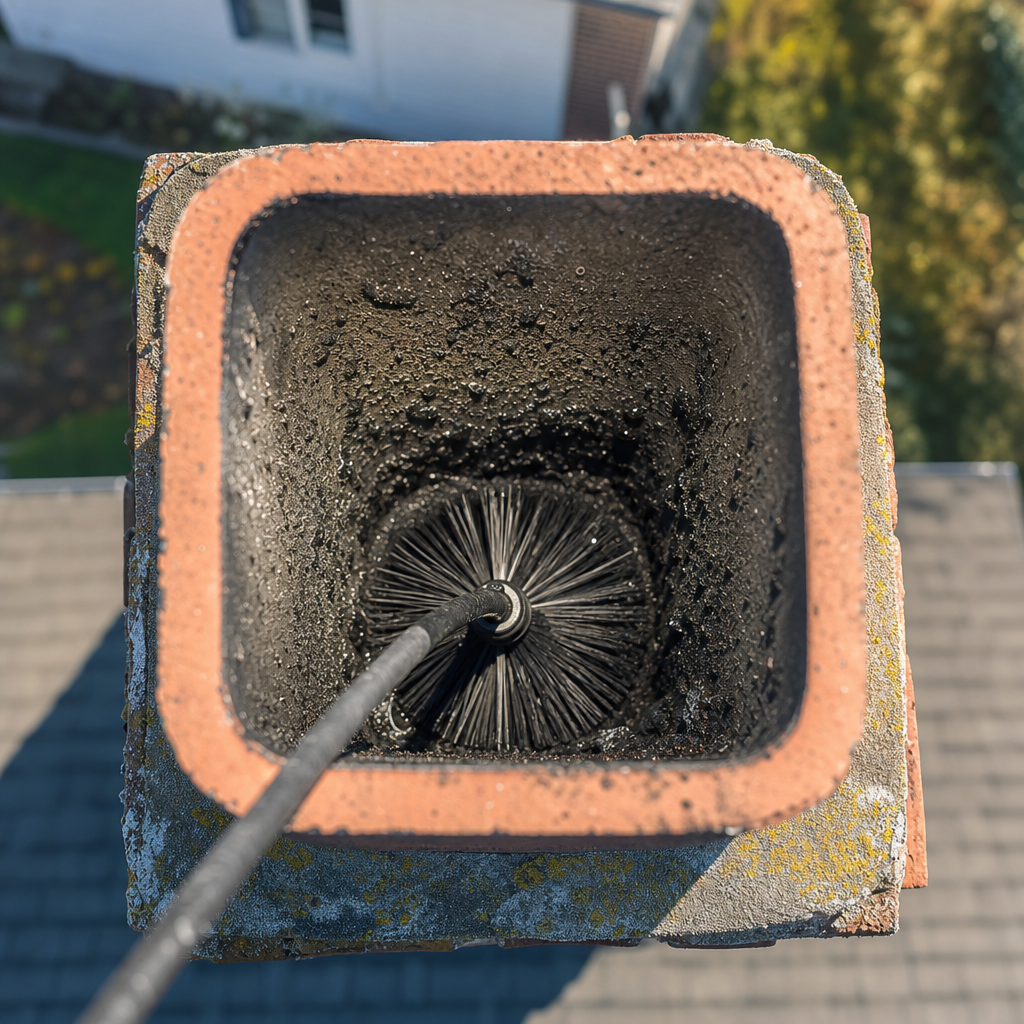
Mechanically agitating and sweeping the flue involves using specialized rotary tools to shatter the chemically treated, brittle creosote crust and safely extract it from your chimney system. While standard wire brushes merely polish and harden dangerous glaze, mechanical agitation completely breaks the bond between the tar and your flue liner. According to the National Fire Protection Association (NFPA), failure to clean accumulated creosote is the leading cause of chimney fires, making professional sweeping an essential annual safety measure.
Rotary Power Sweeping Techniques
To safely remove the fractured deposits without damaging the underlying masonry, technicians use a specific, multi-step mechanical process:
- Select the Right Rods and Heads: Flexible, button-lock power rods are equipped with specialized heavy-duty plastic or brass loop heads designed to shatter brittle glaze.
- Controlled Rotation: The rods are attached to a high-torque drill, spinning the loops rapidly to scrape the flue liner walls cleanly.
- Clear Key Components: The sweep must carefully clear the damper, smoke shelf, and smoke chamber where heavy soot settles.
Protecting the Fireplace and Interior Living Space
Unlike uncertified contractors who often leave behind a mess of toxic soot, a premium service prioritizes your home’s indoor air quality. Before any mechanical sweeping begins, technicians seal the fireplace throat with heavy plastic sheeting and establish a negative pressure zone using an industrial HEPA vacuum. This containment system ensures that fine black dust and dislodged creosote are captured instantly, keeping your living room pristine. When considering the cost of service, this level of dust-free execution and care is what separates an expert from a general handyman.
Step 6: Inspect Key Components for Structural Damage
Need chimney sweep for creosote buildup?
We’re available now — call for a fast, free estimate.
Inspecting your chimney’s key components immediately after creosote removal is an essential safety step because heavy tar deposits often mask hidden structural damage. Clearing away the soot allows a professional to evaluate the physical integrity of the system, ensuring that no fire or toxic gases can escape into your home’s living spaces. If structural flaws are ignored, even a clean chimney remains a major household hazard.
Checking the Flue Liner and Chimney Cap
According to the Chimney Safety Institute of America (CSIA), even minor cracks in a clay flue liner can allow heat to transfer to nearby combustible wood framing in under three hours. Creosote removal often reveals these dangerous fractures, as well as spalling or missing mortar joints. During the same inspection, it is essential to examine the chimney cap. A damaged or missing cap allows rainwater to enter the flue, which accelerates the corrosive breakdown of the liner and creates the damp environment where new creosote quickly forms.
Evaluating the Damper and Firebox Integrity
A warped damper or cracked firebox brick compromises your control over airflow, directly reducing heating efficiency and increasing creosote production. When looking for a local service provider, select a team like Sterling Chimney Cleaning Yonkers that evaluates these components at the same time. While some general contractors require separate appointments for repairs, a dedicated chimney specialist can often resolve issues with liners, dampers, and caps during the same visit.
For homeowners budgeting for these essential maintenance steps, the cost of a chimney sweep is a small investment compared to the price of rebuilding a damaged masonry firebox. If you suspect your system has hidden damage, securing a professional inspection is the fastest way to restore complete structural safety.
What Does Chimney Sweep for Creosote Buildup Cost?
The average cost of chimney sweep services for standard maintenance typically ranges from $150 to $300 according to Angie’s List, while advanced Stage 3 creosote removal costs are higher due to specialized equipment, ranging from $500 to $1,000 or more. The average chimney cleaning cost nationwide sits at $250, depending on the severity of the soot and glazed tar.
Price Ranges for Common Chimney Services
The cost of restoring your flue depends on the state of the deposits. Standard wire brushes actually polish and harden Stage 3 glazed creosote instead of removing it, which is why specialized chemical and mechanical treatments command a higher price point.
| Service Type | Standard Sweep (Stage 1) | Intensive Sweep (Stage 2) | Chemical & Rotary (Stage 3) |
|---|---|---|---|
| Cost Range | $150 – $300 | $250 – $450 | $500 – $1,000+ |
| Core Tools | Wire brushes | Rotary loops | Chemicals and specialized softeners |
| Removes Glaze? | No | No | Yes |
| Brush Polishes? | Yes | Yes | No |
Why Local Quotes Matter
Unresponsive general contractors often lack the specialized chemical agents needed to dissolve glaze safely, leading to incomplete jobs and hidden fees. Choosing a dedicated local provider ensures transparent, upfront pricing. Homeowners in the Yonkers and surrounding Westchester area benefit from accurate on-site evaluations that prevent unexpected fees.
Frequently Asked Questions About Creosote Removal
Professional creosote removal is the most reliable way to eliminate highly flammable flue deposits and keep your fireplace operating safely. While basic sweeping handles early soot, advanced tar buildup requires specialized mechanical and chemical intervention to protect your home.
How much does chimney creosote removal cost?
The average cost of chimney sweep services for standard maintenance typically ranges from $150 to $300 based on Angie’s List data. However, Stage 3 removal costs are higher due to specialized equipment, with advanced chemical treatments and rotary mechanical cleaning pushing the total cost between $500 and $1,000. The national average chimney cleaning cost sits at $250, with rates reflecting regional labor and the specific severity of the tar buildup.
How do chimney sweeps remove heavy creosote buildup?
Certified sweeps use a careful, multi-step process to remove tough, glazed creosote without damaging the underlying flue liner:
- Chemical Neutralization: Sweeps apply professional-grade chemical powders or liquid sprays to break down the sticky, hardened Stage 3 glaze.
- Thermal Reaction: Regular fireplace use over several days activates these chemicals, converting the tacky tar into a brittle, flaky ash.
- Mechanical Agitation: Technicians use specialized rotary loops and industrial power whips to shatter and sweep away the loosened crust.
What is the best way to clean stage 3 creosote?
The best way to clean Stage 3 creosote is through chemical treatment followed by mechanical rotary loops. Standard wire brushes are ineffective because they merely polish the hardened glaze, making it slicker without actually removing the fire hazard. Caustic chemical treatments must be applied first to break down the tar’s molecular structure.
Can I remove creosote buildup myself or do I need a professional?
While you can brush away light soot yourself, you need a professional for heavy or glazed creosote removal. Standard retail wire brushes are ineffective against Stage 3 glaze. Instead of clearing the tar, they merely polish and harden the hazard. Professionals possess the industrial-grade chemical neutralizers, rotary power tools, and high-resolution inspection cameras required to safely clear the flue without damaging the clay or metal liner.
How often should a chimney be swept to prevent creosote?
According to the National Fire Protection Association (NFPA) Standard 211, chimneys, fireplaces, and vents must be inspected at least once a year. Safety experts further recommend a complete sweeping whenever soot and creosote accumulation reaches 1/8-inch thickness to prevent chimney fires. If you burn wood daily, you may need quarterly sweepings to manage creosote buildup safely.
What are the signs of dangerous creosote buildup in a fireplace?
Common signs of dangerous buildup include a strong, unpleasant campfire smell coming from the fireplace when it is not in use, visible black or shiny crust on the chamber walls, draft issues where smoke backs up into the room, and soot falling down into the firebox. If you look up into your flue with a flashlight and see a thick, glassy, or bubbly black layer, your chimney has reached Stage 3 creosote and requires immediate professional attention.
Keep Your Fireplace Safe Today
Do not wait for hidden glazed creosote to spark a dangerous chimney fire. At Sterling Chimney Cleaning Yonkers, we provide the reliable, thorough cleaning you need to protect your home and family. Our fully licensed and insured team serves homeowners throughout Yonkers, Westchester County, the Bronx, and Bergen County with fast, same-day service and clear, upfront pricing.
Contact us at (844) 660-6590 today to secure your same-day appointment, get a completely free estimate, and claim your 10% new customer discount. Let our experienced sweeps restore your peace of mind and keep your home safe.
Need chimney sweep for creosote buildup?
We’re available now — call for a fast, free estimate.
Sources
- NFPA 211: Standard for Chimneys, Fireplaces, Vents, and Solid … – basc.pnnl.gov
- [PDF] The Creosote Problem—Chimney Fires and Chimney Cleaning – archive.lib.msu.edu (2000)
- Are Chimney Cleaning Logs Effective? (2026) | Today's Homeowner – todayshomeowner.com (2026)
- Building or Environmental Troubleshooting Article at InspectApedia.com – inspectapedia.com
Related reading: Licensed Chimney Cleaners | Call Now-10% Off | Same-Day Service | Free Estimate
Related reading: Chimney Maintenance Yonkers | Call Now-10% Off | Same-Day Service | Free Estimate
Related reading: Chimney Cleaning Near Me | 10% Off & Free Estimate | Same-Day Service
Frequently Asked Questions
How long does a professional Stage 3 creosote removal treatment take to complete?
Because Stage 3 glazed creosote requires a chemical application to break down the hardened tar, the process is typically split into two steps. First, the specialized chemical neutralizer is applied and must be allowed to cure for several days to convert the glaze into a brittle ash. After this curing period, the technicians return to perform the mechanical rotary sweeping, which usually takes 1 to 3 hours to safely complete.
Will my homeowner's insurance cover the cost of professional creosote removal?
No, standard homeowner's insurance policies generally do not cover preventive maintenance, which includes routine chimney sweeping and creosote removal. However, neglecting this maintenance can lead to denied claims if a chimney fire occurs due to unaddressed buildup. To keep your home safe and maintain proper compliance, you can call Sterling Chimney Cleaning Yonkers at (844) 660-6590 for a free estimate and same-day service.
Can I safely burn softwoods like pine if I get my chimney swept regularly?
While regular sweeping helps, burning softwoods like pine is highly discouraged because they contain high resin content that accelerates dangerous creosote accumulation. Even with frequent cleanings, softwoods will cause rapid Stage 2 and Stage 3 glazed buildup compared to seasoned hardwoods. For maximum safety between professional visits from Sterling Chimney Cleaning Yonkers, always burn seasoned hardwood with a moisture content under 20 percent.
About the author
 |
Sarah O’Connor Sarah O’Connor is a seasoned home maintenance writer with over six years of experience focusing on HVAC and chimney safety. Holding a B.A. in Communications from Marist College, she has contributed extensively to regional home improvement publications in New York. Sarah specializes in translating complex safety standards into practical advice for homeowners. |
Chimney overdue for a cleaning or inspection?
We’re available now — call for a fast, free estimate.
Call Now - Free Estimate